Bordeaux and history Site Home - What's New? Feedback - About Jack- Travel/Art Links

Bordeaux area
|
Bordeaux and history Site Home - What's New? Feedback - About Jack- Travel/Art Links |
|
|
|
Bordeaux area |
|
Bordeaux in history until today |
||
| back to Bordeaux contents |
Bordeaux, squatting in the depths of the
Gironde, could be London, Carthage, Rotterdam or New-York, could have been
Occitan but is only Bordeaux, capital on paper, capital of provincial paper,
former satellite of London, and today of Paris….a port that only discovered
America at the moment of the slave trade” , said Yves Rouquette in
“Occitanie” Is it true that Bordeaux, a mercantile city lost its port anyway, is grand and terribly shabby and monotonous? A hallucinatory city of long flat vistas in a million nuances of white. Nearly all its monuments, its squares, its uniform quayside, its proto-Haussmanian boulevards—the very features that made it to one of the most beautiful cities of France, according to Stendhal. The bordelaise screamed about every one –because they had to pay for them, a terrible imposition, though the money was rolling in, thanks to the slave trade. These days, at least, the architecture helps the city earn a few Euros as a film set. Bordeaux has played the part Paris, London, Seville and even Boston in costume dramas. And let’s not forget Victor Hugo’s opinion about Bordeaux: “Add Antwerp to Versailles and you have Bordeaux”. Bordeaux is gothic, and 18th century, splenetic, nostalgic and funky, a stone necropolis that has always to the north for tutelage while it made a living of its port. Today the city seems uncertain, divorced from the Garonne by a furious funnel of traffic. Bordeaux is France’s 8th city in population (220,000) and a sea as well a river port. The quays of the city lie in a half moon pattern along the Gironde. It is of course the wine industry and transport that makes most of Bordeaux income today. Let’s start with the very beginning: the ancient Greek, Strabo was the first to mention the Gironde estuary in 3th century B.C.. Later, this small Gallic village grew into a bustling Roman city “Burdigala”, occupied, along the centuries by the Goths, the Arabs and the Normans. In the 7th century, the Merovingian king DAGOBERT made Bordeaux the capital of the 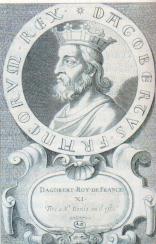 duchy of Aquitaine. In the 12th century, Eleanor inherited the Duchy and
gave Bordeaux first to France (1137), then to Anjou and England
duchy of Aquitaine. In the 12th century, Eleanor inherited the Duchy and
gave Bordeaux first to France (1137), then to Anjou and EnglandBordeaux blossomed under the English and grew so much that the walls had to be rebuilt twice. But the French didn’t take this situation for granted and Edward the third, opening the Pandora box, triggered the 100-years war by claiming the French throne, himself being an Englishmen. The French finally took Bordeaux in June 1451 “Male Tornade” (Rotten day), 10,000 Bordelais were massacred. The final conquest by the French in 1453 was so unpopular that the Bordelais rebelled off and on until the end of the 17th century. By the beginning of the French revolution, Bordeaux had a lot of contacts with the new United States and the influence of Montesquieu and the Philosophes to make the local Girondin party a moderate force at the Convention in Paris. They clashed with the Jacobin fanatics who believed in a centralized dictatorship. In 1793, suspected of fomenting an insurrection, 22 Girondins were arrested by Robespierre and died on the guillotine. Only after WWII Bordeaux regained her ancient, commercial dynamics. But that is for next article.
Biblio: |
|