Located 35 km
N.E. of Bordeaux, SAINT-EMILION is set in a natural amphitheatre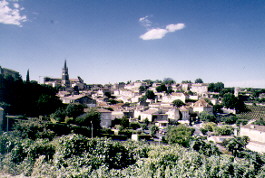 surrounded by its famous vines, a genuine, precious gem, a lovely town of 2800
inhabitants. Its altitude is 76 meters. It’s in such a village that you can find
what makes the charm of a medieval French village. , steep streets with
uncertain cobblestones, ramparts hidden by thick vegetation, gothic churches in
majestic architecture, little squares nestled in the vineyards….
surrounded by its famous vines, a genuine, precious gem, a lovely town of 2800
inhabitants. Its altitude is 76 meters. It’s in such a village that you can find
what makes the charm of a medieval French village. , steep streets with
uncertain cobblestones, ramparts hidden by thick vegetation, gothic churches in
majestic architecture, little squares nestled in the vineyards….
It kept its old fashioned elegance and certain streets are so steep that
handrails have been installed down their centers. The town keeps its greatest
secret underground, like Europe’s largest subterranean church. Come out of
season if possible, or at least late in the day to avoid the crowds of
day-trippers, or stay overnight, and see the sights first thing in the morning.
In 1999 St.Emilion was classed world heritage site, the first wine growing area
to achieve this status. It will probably mean more visitors than ever.
The history of
Saint-Emilion is a cute one. The arrival in the 8th century of a Benedictine
hermit from Brittany, named Emilion. His piety attracted a number of companions,
which enlarged the natural shelters and caves on the site. The largest one was
used as church, to become the EGLISE MONOLITHE. When the founder died, the
monastery took his name: Saint-Melyon in langue d’Oc.
A walled town
grew up around the monastery and it received its first charter in 1199, with a
new civil authority of a hundred peers from the bourgeoisie known as the “jurade”.
They did the tax collecting and organized a local militia to maintain the
quality of wine, wine that was mainly grown for the British crown.
The wines of
Saint-Emilion became more and more famous but the 100-year’s war brings lots of
destruction as well as the French revolution, when the town loses all its
privileges.
Today, the
small city lives mainly from its wine, the “jurade “is back again.
Four of the
town’s principal sights can only be seen on the tourist office’s guided tour,
but don’t fail to take a wander of your own. If you’re staying a night, save the
tour of the well-preserved wall towns for dusk, when the views are at their most
romantic.
|