Beynac perigord dordogne josephine baker Site Home - What's New? -Feedback - About Jack- Travel/Art Links

Dordogne-Perigord
|
Beynac perigord dordogne josephine baker Site Home - What's New? -Feedback - About Jack- Travel/Art Links |
|
|
|
Dordogne-Perigord |
|
PERIGORD-Bergerac-Tobacco Museum and Cyrano de Bergerac |
||
| back to Dordogne contents |
|
|
BERGERAC, a town made for
living, both dynamic and welcoming. Known far and wide is a fine little city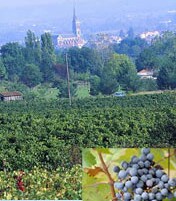 where ducks and swans swim in the Dordogne
It is also a town rich in culture, capital of Périgord pourpre, (purple
Périgord) it offers a dense architectural heritage. Seducing, living dolefully,
quiet and VERY provincial.
And imagine: during the 100-years war, it changed nationality SIX times!
Bergerac is the home of the national institute du TABAC but boasts also a unique
museum on the much maligned weed.
A stroll of the city should start on the “ancient port” At the corner of rue du
port Dordogne River was prone to numerous and devastating floods which submerged
the lower part of the town. The highest level ever reached was in 1783 when it
carried the wooden bridge away.
Continue your walk among a series of houses testifying to the evolution of
bourgeois Renaissance architecture at the end of the Ancient Regime
In the rue des Fontaines in the corner, a fountain and opposite a handsome
residence specific to the 14th century.
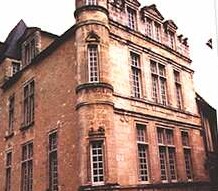 But let’s make a quick visit to the Tobacco museum. This prestigious private
residence that is so very characteristic of the epoch of Henri IV was built in
1604 by the rich merchant family, the Peyrarèdes, architecture being a
combination of Renaissance and Classicism. The therefore, the building, was
listed since 1983 of national interest.
But let’s make a quick visit to the Tobacco museum. This prestigious private
residence that is so very characteristic of the epoch of Henri IV was built in
1604 by the rich merchant family, the Peyrarèdes, architecture being a
combination of Renaissance and Classicism. The therefore, the building, was
listed since 1983 of national interest.
There are four main themes: the discovery of tobacco, the social history of
tobacco, tobacco and painting, craftsmanship. The collection is presented in a
very agreeable setting. In particular, the visitor can follow the development of
this social phenomenon from its American Indian origins to the present day.
Behind the Tobacco museum is Bergerac’s 19th century Protestant Temple and just
behind, on the Quai Salvette, the picturesque 16th century “Cloitre des
Recollets”, a Franciscan order founded in Spain in the late 1400. Today it is
used as a Maison du Vin.
If you have read the book by Edmond Rostand or see the movie “Cyrano de
Bergerac” with Depardieu, you will be curious to something of this legendary
man.
 |
|
Edmond Rostand |
It is on the place de la
Myrpe that you can see Cyrano’s statue.
Rostand based much of his character on the real Savie Cyrano, born in Paris from
Italian parents. A very loudmouth extrovert and poet, he was appointed as a
musketeer. Legend says he had a very long and large nose. Therefore he was very
sensible on people’s remarks and he was a renowned duelist; published tragedies,
comedies, letters and a humorous essay: “Le Voyage dans la lune”
Bibliography
The Lost Sonnets of Cyrano de Bergerac: A Poetic Fiction by James L. Carcioppolo (1998); T Cyrano relu et corrigé: lettres, "Estats du soleil", "Fragment de physique" by Madeleine Alcover (1990); Cyrano de Bergerac: historiens, legendens og Rostands Cyrano de Bergerac: en biografi by Peter Jerndorff-Jessen (1984); Cyrano de Bergerac and the polemics of modernity by Erica Harth (1970); Le patrimoine de Cyrano de Bergerac by J. Lemoine (1911); Cyrano de Bergerac by Edmond Rostand (performed in 1897, publ. 1898, trans. among others by Brian Hooker and Anthony Burgess)