|
Main
Belgium page
Antwerp
main visit page
Diamonds
in Antwerp (1)
Diamonds
in Antwerp (2)
Underestimated
Antwerp
Antwerp zoological
gharden
|
Just behind Central Station, on the Koningin Astridplein, lies a world famous zoo, the Antwerp Zoo, created in 1843, considered as one of the oldest in Europe. Its location - originally just outside the city walls, now an oasis of peace in the heart of the city is typical of its nineteenth-century origins.
21st of July 1843: the "Société Royale de Zoologie d'Anvers" acquires a piece of land of 2 hectares, outside the city ramparts. Central Station didn't exist at that time, just an old railway station in wood (Gare de l'Est). In 1854 it were already 7 hectares and in 1904, the "most beautiful garden in the world" dixit the people of Antwerp, spread out on 10 hectares. During the 1920s the zoo gained prominence for breeding the then newly discovered okapi and Congo peafowl. In 1936 the zoo acquired 36 hectares (90 acres) in Planckendael on which it later developed a breeding station for endangered species such as the bongo antelope and Indian rhinoceros.
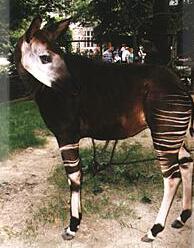 First giraffe in 1849, elephant in 1852. The first ever-captured okapi was brought to Antwerp in the 1950's. At the beginning of the century, the zoo was the main Sunday walk destination of Antwerp citizens. First giraffe in 1849, elephant in 1852. The first ever-captured okapi was brought to Antwerp in the 1950's. At the beginning of the century, the zoo was the main Sunday walk destination of Antwerp citizens.
The Zoo has one of the largest and most diversified animal collections in Europe. It houses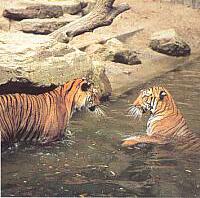 more than 6,000 specimens, including about 300 reptiles and 1,700 fish, which represent more than 1,160 different species. Among the most notable specimens of the mammal collection are the rare "Père David's deer" and white rhinoceroses. They will amaze you, endear you or fill you with the greatest respect. The Antwerp Zoo is perhaps best known for its development of a special display technique for reptile
exhibits. This technique involves the use of a cold barrier (i.e., a refrigerated zone), rather than iron bars or glass panels, as a means of containing reptiles in their enclosures. more than 6,000 specimens, including about 300 reptiles and 1,700 fish, which represent more than 1,160 different species. Among the most notable specimens of the mammal collection are the rare "Père David's deer" and white rhinoceroses. They will amaze you, endear you or fill you with the greatest respect. The Antwerp Zoo is perhaps best known for its development of a special display technique for reptile
exhibits. This technique involves the use of a cold barrier (i.e., a refrigerated zone), rather than iron bars or glass panels, as a means of containing reptiles in their enclosures.
The roaring, whistling and screeching hosts of the zoo enjoy the comfort and freedom of movement in the magnificent environment provided by nature and architecture.
Take now the new elephants enclosure and building, a remainder of the 19th century, the oldest building of the zoo and still the latest Egyptology style building (1854). Decorative elements are Egyptian and the interior courtyard is a pure product of Egyptomania. It has been recently restored.
But there are even more captivating and surprising experiences in store, such as the nocturama, the planetarium, the botanical greenhouse, the aquarium, etc.
You must set aside at least half a day for a visit because there really is so much to see and do.
 An anecdote: a tiger escapes on Sunday 7th of June 1868 !! General alert!! The manager, a few
guards and the doorman start a posse in the streets of Antwerp. The animal flees through the Carnotstraat and wounds mortally an innocent Sunday stroller in the Gemeentestraat. The wild beast continues up to the St. Jacobsmarkt and ends in the Sint-Anna gang, in front of the door of the brothers De Braekeleer, very well known painters. The zoo manager shoots the animal, and Adriaan de Braekeleer finishes the job. If you don't believe me, he immortalized the event in one of his paintings.
An anecdote: a tiger escapes on Sunday 7th of June 1868 !! General alert!! The manager, a few
guards and the doorman start a posse in the streets of Antwerp. The animal flees through the Carnotstraat and wounds mortally an innocent Sunday stroller in the Gemeentestraat. The wild beast continues up to the St. Jacobsmarkt and ends in the Sint-Anna gang, in front of the door of the brothers De Braekeleer, very well known painters. The zoo manager shoots the animal, and Adriaan de Braekeleer finishes the job. If you don't believe me, he immortalized the event in one of his paintings.
Bibliography
Cultuurstad Antwerpen, by G. and F. Auwera (Hadewijch Antwerpen 1993), Tussen Leien en Singel, by G. Van Cauwenberg (Hadewijch Antwerpen 1987), Kunst en cultuurgids Anwterpen, by A. Thijs, S. Beele, P. De Laet, R. Mannaerts en J. Ruymaekers (Brepols Antwerpen 1993)Le clin d'oeil de l'Ange , by Françoise Mallet-Joris (Gallimard Paris 1983), La Flandre est un songe, by Michel de Ghelderode (La Rose de Chene, Bruxelles 1982)."Le Cant du Paradis: le zoo d'Anvers a 150 ans, by Roger Avermaete (L'Eglantine -Brussels 1932)
|

