Burgundy country history culture Site Home - What's New? -Feedback - About Jack- Travel/Art Links

Burgundy
|
Burgundy country history culture Site Home - What's New? -Feedback - About Jack- Travel/Art Links |
|
|
|
Burgundy |

|
|
Geographical introduction to Burgundy |
|
|
Burgundy considers itself the heart of France, a prosperous region with
world-renowned wine, earthy but excellent cuisine and magnificent architecture. Franche-Comté to the east combines gentle farmland with lofty alpine forests. 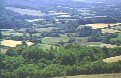 Unlike many other parts of
France, this region, situated at the very heart of the country, is not a clearly
defined entity. It is in fact a tapestry of many varied landscapes, valleys,
plains uplands and mountains. With a surface of 32,000 sq Km, Burgundy covers
some 6 % of France, roughly the same size as Belgium. Unlike many other parts of
France, this region, situated at the very heart of the country, is not a clearly
defined entity. It is in fact a tapestry of many varied landscapes, valleys,
plains uplands and mountains. With a surface of 32,000 sq Km, Burgundy covers
some 6 % of France, roughly the same size as Belgium. Under the Duke of Valois, Burgundy was France's most powerful rival, with territory extending well beyond its present boundaries. By the 16th century, however, the duchy was ruled by governors appointed by the French king, but it still managed to keep its privileges and traditions. Once a part of Burgundy, Franche-Comté -the Free County- struggled to remain independent of the French crown, and was a province of the Holy Roman Empire until annexed by Louis XIV in 1674. Burgundy, now as in the past, is a wealthy region, a centre of medieval religious faith which produced Romanesque masterpieces at Vézelay, Fontenay and Cluny. Dijon is a splendid city, filled with the great palaces of the old Burgundian nobility and a collection of great paintings and sculptures in the Musée des Beaux-Arts. The vineyard of the Côte d'Or, the Côte de Beaune and Châblis yield some of the world's most venerated wines. Other richly varied landscapes - from the wild forests of the Morvan to the lush farmland of the Brionnais - produce snails, Bresse chicken and Charolais beef. Champagne region lies to the north, the Jura and Franch-Comté to the east and the Lyonnais region and the Loire valley to the west. Although it lies in the east of the region, the Saone valley, together with the limestone Cote d’Or uplands between the region’s capital of DIJON and the smaller rural town of Autun, forms the historic heart of Burgundy. In the Dijonnais, as it is called, every type of landscape is represented, so this corner of Burgundy serves as a good starting point. |