Usse chateau de la Loire fairy tale Site Home - What's New? -Feedback - About Jack- Travel/Art Links

Loire Valley
|
Usse chateau de la Loire fairy tale Site Home - What's New? -Feedback - About Jack- Travel/Art Links |
|
|
|
Loire Valley |

|
Loire valley-Chateau d'Ussé-A fairytale castle |
||
|
|
Ussé
|
|
|
In the gallery,
amusingFlemish tapestry from Teniers the Younger representing hyper realistic
daily scenes: angry dogs, on every corner a man doing its natural needs without
any shame...you could think you're present in the tapestry! Also other beautiful
Flemish tapestries. In the
antechamber on the first floor, an incredible 16th century Florentine cabinet in
ebony and pear-tree wood encrusted with mother-of-pearl and ivory. It has no
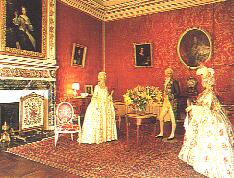
less than 49 drawers! In the rooms Louis XIV, Louis XV and Louis XVI (who never
set a foot in these rooms), you can see a bed "a la Polonaise", on
wheels, and wax personages of which Voltaire, sitting on a sofa admiring the
delicate work of women making French robes in hand embroidered silk, with
bouquets in their hands, all different. The watch trail around the chateau is
bordered by glassed pieces, all evoking episodes of the "Sleeping
Beauty". Bibliography Guide du Patrimoine, Centre, Val de Loire ,
by Perouse de Montclos (ed.Hachette 1992)—Het dal van de Loire, by A.Sperber
(Brussels, ed.Harenberg 1992),-- Guide du Routard 1998 (ed.Hachette)—de
kastelen van Frankrijk, by L.P.Boon (1956), « Perrault et ses chateaux féeriques,
réalité ou fiction ? » by François de Lalande, (ed.Stadspress-Ekeren)« de
mooiste kastelen van Frankrijk », by Daniel de Gans (ed.Lannoo 1996) |
||
 Quite
expensive entrance fee. The visit is obligatory in-group. To get at the chateau,
exit Chinon by the D 751 direction Tours, arriving at the crossing with the D 16
turn left direction Huismes. From there, straight on, cross the D 7 and later
the Indre river, then take the little road leading to l'ile Saint-Martin. From
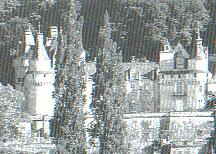
l'Ile Saint-Martin to Rigny-Usse, the road offers a few exceptional views on a
profusion of roofs, turrets, chimneys, slender spires and corner-turrets of this
extravagant chateau set in its dark green casket of the surrounding forest
Quite
expensive entrance fee. The visit is obligatory in-group. To get at the chateau,
exit Chinon by the D 751 direction Tours, arriving at the crossing with the D 16
turn left direction Huismes. From there, straight on, cross the D 7 and later
the Indre river, then take the little road leading to l'ile Saint-Martin. From
l'Ile Saint-Martin to Rigny-Usse, the road offers a few exceptional views on a
profusion of roofs, turrets, chimneys, slender spires and corner-turrets of this
extravagant chateau set in its dark green casket of the surrounding forest