|
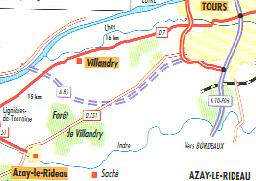 One
of the last Renaissance chateaux built on the Loire 1536) and overhanging the
large valley where Cher and Loire join. The builder was Jean Le Breton, doing it
in a sort of transition phase because the nobility and the French kings had
moved from Touraine to Ile de France (1526). Interesting story, the one of this
chateau. Michel-Ange de Castellane, who bought the chateau in 1754, tried to
remove all 16th century aspects from the chateau. He ordered to
chisel the facades until they looked classic again. In his desire to follow the
trend at his time he effectuated a few other changments: he added fake windows
between the real ones already existing in the facades. The old 12th century
dungeon was covered by an octagonal pavilion!! Imagine the One
of the last Renaissance chateaux built on the Loire 1536) and overhanging the
large valley where Cher and Loire join. The builder was Jean Le Breton, doing it
in a sort of transition phase because the nobility and the French kings had
moved from Touraine to Ile de France (1526). Interesting story, the one of this
chateau. Michel-Ange de Castellane, who bought the chateau in 1754, tried to
remove all 16th century aspects from the chateau. He ordered to
chisel the facades until they looked classic again. In his desire to follow the
trend at his time he effectuated a few other changments: he added fake windows
between the real ones already existing in the facades. The old 12th century
dungeon was covered by an octagonal pavilion!! Imagine the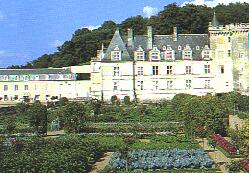 overcharged impression that this extravagant ensemble must have given! Curious
taste I must say. Probably he would
have been flabbergasted when he would have seen how much trouble Joachim de
Carvalho, the Spaniard, grandfather of the actual owner, who bought the castle
in 1906, went trough to make that 16th century live again in the
castle’s aspect. Not only did he restore Villandry completely, but he designed
the world famous gardens in its unique style. The architects had no clue how it
looked like in the 16th century so they were helped by etchings and
sketches from other 16th century gardens.
overcharged impression that this extravagant ensemble must have given! Curious
taste I must say. Probably he would
have been flabbergasted when he would have seen how much trouble Joachim de
Carvalho, the Spaniard, grandfather of the actual owner, who bought the castle
in 1906, went trough to make that 16th century live again in the
castle’s aspect. Not only did he restore Villandry completely, but he designed
the world famous gardens in its unique style. The architects had no clue how it
looked like in the 16th century so they were helped by etchings and
sketches from other 16th century gardens.
The opening hours of the CHATEAU are rather complicated. Let's see.
Open in April, June and September to end October from 9.00 AM to 6.00 PM.
Closing time 5.30 PM from end October to November 11.
Open from 9.30 AM to 5.00 PM from begin February to end of March. You can
buy a combined ticket for chateau and gardens.
Joachim de Carvalho didn’t deny his origins inside the chateau. You will find
Spanish furnishing, chests wit Moorish motives, a 13th century
ceiling in Mudejar style (for me the highlight of the visit. Originating
from a mosque build in Spain in the 13th century, it was purchased by Joachim de
Carvalho during a sale in Toledo. At that time it was a sort of puzzle of more
than 3000 pieces!! They had to put it together again, in cedar wood decorated by
gold leaves) and an important
collection of paintings (16th, 17th and 18th centuries) scattered in several
galleries open to the public. From the Goya School, the Zurbaran school but also
works from German schools (16th) and Flemish
(17th).
 The GARDENS
open from 8.30 AM to 8.00 PM in July and August. May, June and the 3 first weeks
of September form 9.0O AM to 7.30 PM. The other months shorter hours. They are
built on three different levels. A remarkable example of landscape art of the
French Renaissance, a combination of geometrical concepts of Italian gardeners
called by Charles VIII and the tradition of French monastic style. The “Jardin d’Eau” on the highest level is made by an enormous
waterpond used for irrigation of the gardens and the supply for different
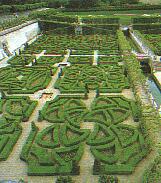
fountains. The ornamental garden, at the intermediate level, located in front of
the chateau, is formed by high box-trees and divided in four squares, each one
representing allegories of love and music. Made out of buxus, taxus and the most
diverse flowers. Notice that the
flowerbeds flourish red in the summer...the colour of blood. In another square,
4 fans (symbol of frivolity) with horns in between.....horns of betrayed love
(no comments please!!!) which indicate here an inconstant love, etc.. Go and see
the kitchen garden at the lower level, it's a masterpiece!! 12,500 square meters
on nine parterres of vegetables, geometrically disposed and bordered by fruit
trees. The GARDENS
open from 8.30 AM to 8.00 PM in July and August. May, June and the 3 first weeks
of September form 9.0O AM to 7.30 PM. The other months shorter hours. They are
built on three different levels. A remarkable example of landscape art of the
French Renaissance, a combination of geometrical concepts of Italian gardeners
called by Charles VIII and the tradition of French monastic style. The “Jardin d’Eau” on the highest level is made by an enormous
waterpond used for irrigation of the gardens and the supply for different
fountains. The ornamental garden, at the intermediate level, located in front of
the chateau, is formed by high box-trees and divided in four squares, each one
representing allegories of love and music. Made out of buxus, taxus and the most
diverse flowers. Notice that the
flowerbeds flourish red in the summer...the colour of blood. In another square,
4 fans (symbol of frivolity) with horns in between.....horns of betrayed love
(no comments please!!!) which indicate here an inconstant love, etc.. Go and see
the kitchen garden at the lower level, it's a masterpiece!! 12,500 square meters
on nine parterres of vegetables, geometrically disposed and bordered by fruit
trees.
It’s from the castle tower that you have the best view on this colour
splendour.
Bibliography
Guide
du Patrimoine, Centre, Val de Loire , by Perouse de Montclos (ed.Hachette
1992)—Het dal van de Loire, by A.Sperber (Brussels, ed.Harenberg 1992),---Par
les champs et par les greves, by G.Flaubert (1885)—Guide du Routard 1998
(ed.Hachette)—de kastelen van Frankrijk, by L.P.Boon (1956)-Villandry et
Jardins (folder at the entrance of chateau)
|