|
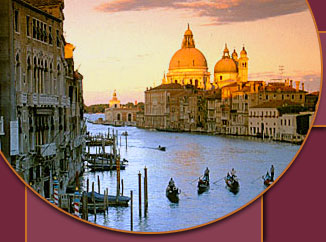
Piazza San Marco, extraordinary and invaded by tourists, was made to bewitch foreign visitors and the charm of the Piazza San Marci still operates. Cross-and delicacy of a visit to Venice, delicacy for the magic of this area, a cross for the oppressing crowd in the summer....
To get rid of all these tourists, come out of season or in summer very early in the morning or late at night. More popular than any other square in the world, not only because of its bewildering architecture-intriguing combination of Western and Oriental-but because this square is the heart and the soul of the city since hundreds of years.
The Piazza, like the majority of the Venetians calls it, occupies the site of an ancient vegetable garden, nourishing the Sisters of San Zaccaria, thousand years ago. The doges had an eye on the grounds and bought it. A square is displayed, a fortified castle built and like it was the use, land was taken away from the sea ...the Piazetta, located in front of the future Doges palace, comes right out of the water!! nourishing the Sisters of San Zaccaria, thousand years ago. The doges had an eye on the grounds and bought it. A square is displayed, a fortified castle built and like it was the use, land was taken away from the sea ...the Piazetta, located in front of the future Doges palace, comes right out of the water!!
And the Piazza, is called San Marco since the city changed its saint patron in 829. Two Venetian merchants "stole" the precious relics of San Antonio from the "infidels" in Alexandria and offered it to the doge. A first sanctuary is built next to the palace, soon replaced by a church, then a basilica. During three centuries, Venice becomes very wealthy, San Marco grows and the Campanile (a sort of beacon permitting the seamen to locate Venice from the sea, later a watchtower, dominates the city. The first "Procuratione" are built, dedicated to administrate the ambitious Republic. Two columns of Constantinople, with the famous San Marco horses are erected on the piazza and mark the official entry portal of Venice in the 12th century. It's there that the enemies of Venice are publicly beheaded, attached to a string stretched between the columns. At that time no citizen of Venice dared to cross the square, to avoid the evil eye....
Venice is at the summum of its glory in the 15th and 16th century. The nest and most renowned artists are put to work to enhance the city. Mauro Cousin rebuilds the "Procurator Vichy" and builds the "clock tower", still giving the right today in Venice. It is soon enriched by the statue of the lion of San Marco. Then, Sansovino builds the edifice of the "Logetta" on the Piazza, logetta that will be used to house the guards protecting the doges. To finish his work, Sansovino builds also the Libreria Marciana, for the State archives.
But now comes Napoleon, 19th century and closes the small side of the piazza by a neo-classic edifice housing the famous "Museo Correr" today.
The magic of San Marco, staying intact and makes it still the privileged rendezvous place for the Venetian, as if time didn't stop.
Newt articles we will take each building separate and have a lot of anecdotes to tell about.
Bibliography
The Companion guide to Venice, by Hugh Honour-Venice and its lagoon, by Giulio Lorenzetti, Venice-A thousand Years of Culture and Civilisation, by Peter Lauritzen-Heures Italiennes, by Henry James (La difference 1985)- Venice, a Literary Companion, by Ian Littlewood's
The World of Venice, by Jan Morris.
|