|
South
of Amboise, this ravishing castle rests on arches to surmount the Cher,
which peaceful waters reflect the perfect beauty of this Renaissance 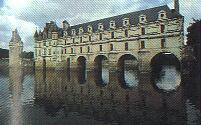 edifice.
The enchanting site, the gardens a la française and green nature
attract a lot of visitors to Chenonceau (the village has an “x” at
the end: Chenonceaux).. It's the most visited site in the French
province after Versailles. In 1997 850.000 visitors compared to the
550.000 for all the other chateaux de la Loire. It’s climbing up to
nearly a million visitors a year. edifice.
The enchanting site, the gardens a la française and green nature
attract a lot of visitors to Chenonceau (the village has an “x” at
the end: Chenonceaux).. It's the most visited site in the French
province after Versailles. In 1997 850.000 visitors compared to the
550.000 for all the other chateaux de la Loire. It’s climbing up to
nearly a million visitors a year.
Buying you tickets, don't forget to ask the free fascicle, very well
done and giving you the opportunity to discover all these beauties in
your own pace, better than following the compact mass of groups guided
by someone who mumbles and blunders through the same text since 20
years!
The history of this chateau is connected to the history of six women: it
was given by the son of Catherine Briconnet to François 1er to pay off
some debts and he declared the chateau another hunting castle. The
second lady was the beautiful 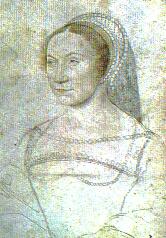 Diane
de Poitiers who received the chateau from her lover, king Henri II. She
built the first beautiful gardens a la française and added a Diane
de Poitiers who received the chateau from her lover, king Henri II. She
built the first beautiful gardens a la française and added a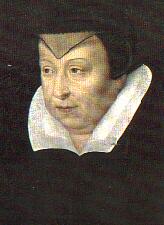 bridge connecting the chateau to the south shore of the Cher. But she
had to exchange it with her great rival Catherine de Medicis for the
chateau de Chaumont-sur-Loire (what a pity!!). Once the chateau in her
possession, Catherine added a big park and built the gallery striding
over the Cher, that gives the chateau de Chenonceau its so typical
aspect. It remembered Catherine the image of the Ponte Vecchio of her
childhood. So Chenonceau is a castle and a bridge at the same time.
Catherine being the third woman, Louise de Lorraine was the
fourth. She received the chateau in legacy from Cathnerine de Medeicis
and after the murder of her husband Henri III she retired in Chenonceau,
and grieved the rest of her life. She did it for 11 years until the
“white queen” died. The fifth woman was Madame Dupin. Who received
writers, poets and intellectuals like Jean Jacques Rousseau, Voltaire
and Montesquieu at the castle. It’s for her son that Rousseau wrote
“Emile ou l’éducation sentimentale”. In “Confessions” he
admitted that the life in Chenonceau was very agreeable. “I was
getting as fat as a monk”, he wrote.
bridge connecting the chateau to the south shore of the Cher. But she
had to exchange it with her great rival Catherine de Medicis for the
chateau de Chaumont-sur-Loire (what a pity!!). Once the chateau in her
possession, Catherine added a big park and built the gallery striding
over the Cher, that gives the chateau de Chenonceau its so typical
aspect. It remembered Catherine the image of the Ponte Vecchio of her
childhood. So Chenonceau is a castle and a bridge at the same time.
Catherine being the third woman, Louise de Lorraine was the
fourth. She received the chateau in legacy from Cathnerine de Medeicis
and after the murder of her husband Henri III she retired in Chenonceau,
and grieved the rest of her life. She did it for 11 years until the
“white queen” died. The fifth woman was Madame Dupin. Who received
writers, poets and intellectuals like Jean Jacques Rousseau, Voltaire
and Montesquieu at the castle. It’s for her son that Rousseau wrote
“Emile ou l’éducation sentimentale”. In “Confessions” he
admitted that the life in Chenonceau was very agreeable. “I was
getting as fat as a monk”, he wrote.
 The sixth
and last woman was Madame Pelouze who bought the chateau in 1864 and
began some serious restoration works during ten years. The sixth
and last woman was Madame Pelouze who bought the chateau in 1864 and
began some serious restoration works during ten years.
The chateau was saved twice of destruction. First during the revolution,
the peasants didn't want to raze the bridge that gave them passage over
the Cher. Second, during WW II all bridges in the Touraine were
bombarded except the chateau, because there was unanimity to say that
Chenonceau was more than a bridge, but one of the most admirable
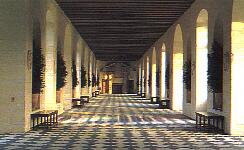
chateaux of France. The 60 meters long gallery of the chateau was often
used by the French resistance as an escape route, since it crossed the
“ligne de demarcation” (border line) between the German occupied
zone and the southern "zone libre" (free zone). The Cher
was the frontier....
Bibliography
Guide
du Patrimoine, Centre, Val de Loire , by Perouse de Montclos
(ed.Hachette 1992)—Het dal van de Loire, by A.Sperber (Brussels,
ed.Harenberg 1997)—Guide du Routard 1998 (ed.Hachette)—de kastelen
van Frankrijk, by L.P.Boon (1956)-Six femmes qui firent Chenonceau, by
G.Wolckowicz (ed. Dominicus 1993)-Chenonceau, visit guide (brochure)
|