|
Dieppe raid on Dieppe in Normandy Site Home - What's New?-Feedback - About Jack-Travel/Art Links |

NORMANDY
Dieppe-The raid on Dieppe
Raid on Dieppe
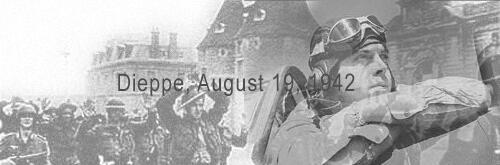
In his admirable “Six
armies in Normandy”, historian John Keegan notes the Dieppe raid looks in
retrospect a recklessly hair-brained an enterprise that it is difficult to re-construct
the official state of mind which gave it birth and drove it forward. I quote
more: “The 2nd Canadian Division was to sally forth in high summer from ports only 70 miles form the
German-occupied coastline and disembark on the esplanade of a French seaside
resort.” Lord Mountbatten wasthe creator and animator of this war episode. His
role and motivations are still heavily debated today.
Division was to sally forth in high summer from ports only 70 miles form the
German-occupied coastline and disembark on the esplanade of a French seaside
resort.” Lord Mountbatten wasthe creator and animator of this war episode. His
role and motivations are still heavily debated today.
Anglo-Canadians called it “Operation Jubilee” and mainly executed by the 2nd
Canadian infantry division, entirely composed by voluntaries. Six thousand men
engaged the combats on the Dieppe cobblestones of which 4,963 Canadians, 250
British commandos, a group of “Français Libres” and a section of American
Rangers. Only 2,211 survived, of which 378 wounded, and returned to Great
Britain. 1874 were left behind as
prisoners (72 died of their wounds).
|
|
|
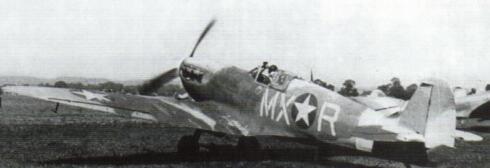
Spitfire Vb |
Planning was imperfect.
Aerial photographic reconnaissance did not show the extent of the German
defences. Intelligence underestimated the strength of the German defences and of
the terrain. We can still form a picture of the operation as the port is still
recognisable what it was like in 1942.
The attack upon Dieppe took place on August 19, 1942. The raid was supported by
eight Allied destroyers and 74 Allied air squadrons (eight belonging to the RCAF).
Major General J.H. Roberts, the Commander of the 2nd Canadian Division, was
appointed Military Force Commander, with Captain J. Hughes-Hallett, R.N. as
Naval Force Commander and Air Vice Marshal T.L. Leigh-Mallory as Air Force
Commander.
Two battalions disembarked, each landing on a separate beach, supported by the
14th Canadian
Tank battalion. Commandos went in, scaling the cliffs over the Arques river to
silence the German positions covering the port entrance. But they did not
account for other German gunners some of whom, when the Royal Regiment of Canada
moved into the mouth of the gully leading into the cliffs and dropped their
landing crafts, could aim right down the open mouths of the vessels. It was a
slaughter. Other landing craft brought in later, tried again the same futile
exercise. Every one of the 554 men who tried were
Canadian
Tank battalion. Commandos went in, scaling the cliffs over the Arques river to
silence the German positions covering the port entrance. But they did not
account for other German gunners some of whom, when the Royal Regiment of Canada
moved into the mouth of the gully leading into the cliffs and dropped their
landing crafts, could aim right down the open mouths of the vessels. It was a
slaughter. Other landing craft brought in later, tried again the same futile
exercise. Every one of the 554 men who tried were 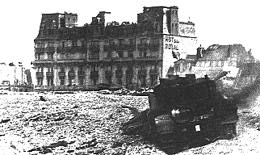 killed
or captured. Other landing crafts, called LCT, carrying Churchill tanks,
undertook a direct assault on the harbour and the promenade. But what was not
known is that the access was blocked by concrete obstacles on which the
sapper’s explosives had no impact. One by one all tanks were wiped out. None
got away. Without any support from the shore, the troops on the beaches were
mown down. The last troops to land were part of the Royal Marine "A"
Commando, which shared the terrible fate of the Canadians. They suffered heavy
losses without being able to accomplish their mission.
killed
or captured. Other landing crafts, called LCT, carrying Churchill tanks,
undertook a direct assault on the harbour and the promenade. But what was not
known is that the access was blocked by concrete obstacles on which the
sapper’s explosives had no impact. One by one all tanks were wiped out. None
got away. Without any support from the shore, the troops on the beaches were
mown down. The last troops to land were part of the Royal Marine "A"
Commando, which shared the terrible fate of the Canadians. They suffered heavy
losses without being able to accomplish their mission.
The raid also produced a tremendous air battle. While the Allied air forces were
able to provide protection from the Luftwaffe for the ships off Dieppe, the cost
was high. The Royal Air Force lost 106 aircraft, which was to be the highest
single-day total of the war. The RCAF loss was 13 aircraft. At 1300 hours General Roberts sent the code word VANCOUVER telling the
entire naval force to turn around and head for England. Operation Jubilee was
over.
|
|
|
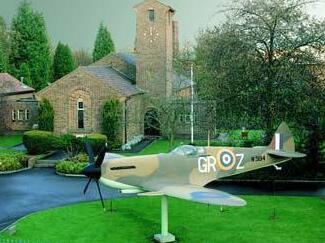
Bigginhill memorial (courtesy picture Joseph J. Merchant OMB. MUF.) |
It will be quite some time before the controversy of the Dieppe raid will ever be put to rest. New information continues to be uncovered and the in-depth analysis of the operation's key players continues even today. It was a complete military failure. It went wrong in every conceivable way. The reasons for the poor planning and poor execution are so deeply rooted that they defy analysis and conventional investigation. We will never know for sure how such a terrible thing could have happened. All we can do is look at the information presented and make educated guesses and form theories. One can only hope that we have learned something from the events leading up to the 19th of August 1942, and that we shall never repeat the horrors of that day; a day that will forever remain a black page in the books of history. “As illuminating”, says, Keegan, “as to say that the Titanic taught important lessons about passenger liner design!”
Bibliography
“Six armies in Normandy”, by John Keegan, (paperback ed. Pimlico), “Green Beach" by James Leasor (Heinemann 1975), "The War of the Landing Craft” by P Lund and H Ludlum (Foulsham 1976), Ville de Dieppe information leaflet, “ Battlefields of Northern France" by Michael Glover (Michael Joseph 1987), ) "Dieppe: The Valor and the Furore", by Brian S. Osborne.
Even more surprising, charming town!