|
back
to Grasse contents
Arriving in Grasse
|
Approaching Grasse, we are
quickly impressed by the location that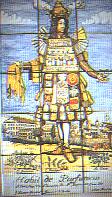 this enlightened city has on the southern slopes of the montage de Doublier.
Around the old centre the terraces are scattered over the city and white houses
hide behind palm trees. Grasse is a balcony on the Cote d’Azur! The world
capital of perfumery lies languidly on the first counter forts of the Provencal
Alps, an old picturesque city of the 7th century. A very satisfying town to
visit, with sp much historic interest and perfumeries abound , it does not feel
like a touristy town. You feel the city working, main square full of "real
"shops", selling cheese bread, buckets and shuffles instead of the
touristy Provencal lavender bags.
this enlightened city has on the southern slopes of the montage de Doublier.
Around the old centre the terraces are scattered over the city and white houses
hide behind palm trees. Grasse is a balcony on the Cote d’Azur! The world
capital of perfumery lies languidly on the first counter forts of the Provencal
Alps, an old picturesque city of the 7th century. A very satisfying town to
visit, with sp much historic interest and perfumeries abound , it does not feel
like a touristy town. You feel the city working, main square full of "real
"shops", selling cheese bread, buckets and shuffles instead of the
touristy Provencal lavender bags.
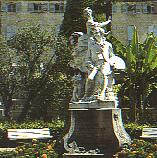 Long
before Cannes, Menton or Nice were trendy, Grasse was visited by the rich and
wealthy from northern Europe, who froze in the winter. One of the most famous
was Pauline Borghese, the preferred and inconstant sister of Napoleon. Grasse
didn’t keep a lot of pleasant memories of her stay. As she was sick there was
a general interdiction of ringing bells and clock towers. Even the donkey bells
were taken off. In 1888 the baroness Alice de Rothschild built a villa where
queen Victoria came to lodge. This villa became later the hotel “Parc
Palace”, where the father of Gerard Philippe, the famous French jeune premier
of the fifties, was the director and Gerard was raised in this house. Long
before Cannes, Menton or Nice were trendy, Grasse was visited by the rich and
wealthy from northern Europe, who froze in the winter. One of the most famous
was Pauline Borghese, the preferred and inconstant sister of Napoleon. Grasse
didn’t keep a lot of pleasant memories of her stay. As she was sick there was
a general interdiction of ringing bells and clock towers. Even the donkey bells
were taken off. In 1888 the baroness Alice de Rothschild built a villa where
queen Victoria came to lodge. This villa became later the hotel “Parc
Palace”, where the father of Gerard Philippe, the famous French jeune premier
of the fifties, was the director and Gerard was raised in this house.
But decadence came and the tourist industry turned its back to Grasse and
old-fashioned hotels like the Parc Palace had to close. The advantage is of
course that, parallel to the so noisy and artificial Riviera, life in Grasse
goes its normal way. Protected from the northern winds by the mountains and
bathing in the sun already soon in the year, Grasse looks like an animated
Italian city where we drink our espresso standing in front of little booths or
sitting on a café chair in one of the cute terraces under the plane trees.
The most important activity of Grasse during middle Ages was tanning. The
leather came in a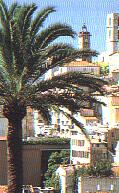 first time from the sheep and goats of the backcountry, but later it was
imported through the harbours of the Mediterranean. Above all that a blooming
glove industry had developed in the city just at the moment that perfumed gloves
became trendy in French and Spanish courts. So Grasse built next to its
tanneries a perfume industry that will stay until our days. In 1724 the glove
industry was separated totally from the perfume industry.
first time from the sheep and goats of the backcountry, but later it was
imported through the harbours of the Mediterranean. Above all that a blooming
glove industry had developed in the city just at the moment that perfumed gloves
became trendy in French and Spanish courts. So Grasse built next to its
tanneries a perfume industry that will stay until our days. In 1724 the glove
industry was separated totally from the perfume industry.
The oldest plants used to manufacture perfume were lavender, mimosa, orange
blossom and green almonds. Traditional houses like “Fragonard”,
“Galimard” or “Molinard” manufacture only the “essence”, while the
perfume is made in fact in Paris. About thirty plants produce now ninety percent
of the “essence” used all over the world to make perfume. Flowers don’t
come anymore alone from the area of Grasse but is imported from twenty
countries.
The best way to study the history of perfume and the making of it is to visit
the MUSEE INTERNATIONAL DE LA PARFUMERIE. Much better than the visit of the
neighbouring perfume house Fragonard where the visit is free. If we don’t have
a clue about the three traditional ways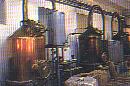 of making flower essence this museum is like a mystery house. A clever invented
computer gives us the possibility to guess what odour we sniff, capitulated at
the first try when I was there due the extreme complexity of its use. But
finally all (almost all) steps of manufacturing are unveiled. Don't forget that
almost all the perfumes of the great fashion designers are created in Grasse.
For the non-initiated the collection of beautiful perfume flasks and other
luxury objects is more interesting. Like the travel kit of Marie Antoinette
containing 53 objects. And don’t forget the upper floor where a glass case in
installed and a lot of flowers push that are important for the perfume industry.
We can put our nose in bags and boxes to inhale the exotic odours, like ylang
ylang and pampas herbs. But don't forget whatever perfumery you will visit, the
Holy of the Holies will NEVER be revealed to you. The perfumers will receive you
in the parlour but NOT in the kitchen! First, because there are manufacturing
secrets to preserve, second because the essence fumes in a factory are very
disagreeable for untrained noses.
of making flower essence this museum is like a mystery house. A clever invented
computer gives us the possibility to guess what odour we sniff, capitulated at
the first try when I was there due the extreme complexity of its use. But
finally all (almost all) steps of manufacturing are unveiled. Don't forget that
almost all the perfumes of the great fashion designers are created in Grasse.
For the non-initiated the collection of beautiful perfume flasks and other
luxury objects is more interesting. Like the travel kit of Marie Antoinette
containing 53 objects. And don’t forget the upper floor where a glass case in
installed and a lot of flowers push that are important for the perfume industry.
We can put our nose in bags and boxes to inhale the exotic odours, like ylang
ylang and pampas herbs. But don't forget whatever perfumery you will visit, the
Holy of the Holies will NEVER be revealed to you. The perfumers will receive you
in the parlour but NOT in the kitchen! First, because there are manufacturing
secrets to preserve, second because the essence fumes in a factory are very
disagreeable for untrained noses.
Bibliography:
John Pemble, "the
Mediterranean Passion, Victorians and Edwardians in the South", (Oxford
University Press 1988), Mary Blume, "Cote d'Azur. Inventing the French
Riviera" (Thames and Hudson, London 1982) Stephen Liegeard, "La Cote
d'Azur (Ed.Serre, Nice 1988), Guide du Routard 1998-99, Patrick Howarth, “When
the Riviera was ours” (Century, London 1977, Peter Graham, “La France par
les petites routes” (Ed.Arthaud 1988), Le Parfum en France, by G.Karioutis
(ed. Lamard1996).
|
back
to Cote d'Azur main page
House
of Fragonard-Visit of city
|