|
back
to Cannes contents
How
Cannes was
founded
Cannes
reflections
Croisette
and port
|
Like Edmund
Wilson writes in his “ The Twenties, from Notebooks and Diaries of that
period”: Cannes is a gleaming town of rose and white, there where the Alps
like Elephants come 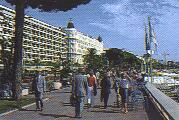 down to kneel beside the calm and azure sea”. down to kneel beside the calm and azure sea”.
Reality, of course, is different: the number of Rolls, Jaguars and Ferraris is
certainly impressive, silver locks are present in strong proportions. Cannes has
undoubtedly developed since Edmund Wilson recorded its charms. The city fell as
a prey to mass tourism, but sparkles miraculously as a jewelled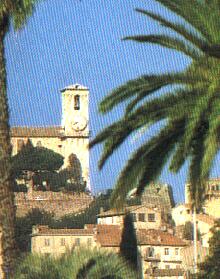 survivor of a
bygone age. Cannes remains an exceptional site, a
coquettish harbour with a lot of hotels and restaurants.....with accessible
prices. Skirting the skies above
Cannes, sumptuous summer palaces still glitter like golden eggs, of what the
French call chicken-nests, and we know mundanely as potholes.
survivor of a
bygone age. Cannes remains an exceptional site, a
coquettish harbour with a lot of hotels and restaurants.....with accessible
prices. Skirting the skies above
Cannes, sumptuous summer palaces still glitter like golden eggs, of what the
French call chicken-nests, and we know mundanely as potholes.
If you arrive via a coastal road is it ---of season--- a good idea to park your
car along the famous AVENUE DE LA CROISETTE or in the parking of the Palais des
Festivals et des Congres. And if we want to understand why Cannes ever was
called “a piece of heaven on earth” we must make the climb to the Place du
Castre at the top of the SUQUET, the rock on which the old Cannes is built.
 |
|
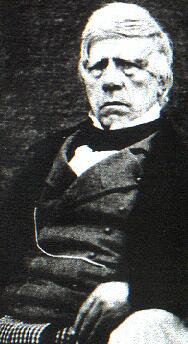
Lord Brougham
|
 During
that climb we will see a portrait of LORD BROUGHAM, the benefactor
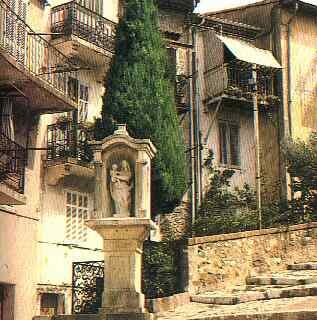
of Cannes and in fact its founder. The Suquet still has its secret alleys,
passages and half-hidden auberges and bistros. Its hill and its moorings date
from roman times. The landmark Tower at the top dates from 11th
century built by the monks of the Iles des Lerins (where we will visit later
on). Just look at the church Notre Dame d’Esperance, you don’t have to
enter. But the view of Cannes and the bay!! We can appreciate its commanding
view of all along the shore and back to the hill La Californie, where Picasso
used to live, but to get this far is an achievement. The cobbled lanes are steep
and narrow and the temptation to photograph too much has spelled the ruin of
many a latter-day photo expedition. We can now understand why Lord Brougham and
his sick daughter Eleonore saw when they were sent back at the Sardinian border
and –sulking the first days---settled down in Cannes in hotel Pinchinat,
that’s the place where you stand now!! But what happened exactly to Lord
Brougham? During
that climb we will see a portrait of LORD BROUGHAM, the benefactor
of Cannes and in fact its founder. The Suquet still has its secret alleys,
passages and half-hidden auberges and bistros. Its hill and its moorings date
from roman times. The landmark Tower at the top dates from 11th
century built by the monks of the Iles des Lerins (where we will visit later
on). Just look at the church Notre Dame d’Esperance, you don’t have to
enter. But the view of Cannes and the bay!! We can appreciate its commanding
view of all along the shore and back to the hill La Californie, where Picasso
used to live, but to get this far is an achievement. The cobbled lanes are steep
and narrow and the temptation to photograph too much has spelled the ruin of
many a latter-day photo expedition. We can now understand why Lord Brougham and
his sick daughter Eleonore saw when they were sent back at the Sardinian border
and –sulking the first days---settled down in Cannes in hotel Pinchinat,
that’s the place where you stand now!! But what happened exactly to Lord
Brougham?
He was Lord Chancellor of Great-Britain (where he championed the abolition of
slavery) but fatigued after six years. He resigned and set off from London with
his sickly daughter Eleonore in search of a mild climate on the Riviera where
the British were already making their presence felt in increasing numbers. He
intended to go to Nice as far as the river Var which then formed a formidable
frontier between Provence (France) and the Kingdom of Sardinia (Italy). However,
he found a raging torrent barring his way. Italian soldiers refused to let him
through as cholera had broken out in Provence. They forced him to turn back,
first to Antibes which displeased him, the to Cannes were an inn had previously
accommodated Victor Hugo and pope Pius VII. This proved more to his liking.
What Lord Brougham and his daughter saw a brown rock with a castle and a square
tower on top and a modest house between the pines and the palm trees. There was
no boulevard de la Croisette, no yacht harbour and, very important, no Palais
des Festivals et Congres. High housing did not cover the hills behind the village and nobody ever heard of
Super-Cannes. Only three roads with fishermen’s houses, the tower of La Castre
and an inn serving bouillabaisse was all there was to Cannes. A lonely fisher
boat bobbed on the blue sea along the narrow coastline of Ile Sainte-Marguerite
or Saint-Honorat. And all the rest was sun, wind and clouds. Brougham was so
captivated by the countryside that within a week he had bought a plot of land
and built the “Villa Eleonore” to the west of Le Suquet along the Frejus
road. It still stands, tastefully converted into flats, on avenue Docteur Picaud.
housing did not cover the hills behind the village and nobody ever heard of
Super-Cannes. Only three roads with fishermen’s houses, the tower of La Castre
and an inn serving bouillabaisse was all there was to Cannes. A lonely fisher
boat bobbed on the blue sea along the narrow coastline of Ile Sainte-Marguerite
or Saint-Honorat. And all the rest was sun, wind and clouds. Brougham was so
captivated by the countryside that within a week he had bought a plot of land
and built the “Villa Eleonore” to the west of Le Suquet along the Frejus
road. It still stands, tastefully converted into flats, on avenue Docteur Picaud.
Bibliography:
Tobias Smollet,
"Travels through France and Italy", (Oxford University Press, Oxford,
New-York in the series World Classics), John Pemble, "the Mediterranean
Passion, Victorians and Edwardians in the South", (Oxford University Press
1988), Mary Blume, "Cote d'Azur. Inventing the French Riviera" (Thames
and Hudson, London 1982), The Twenties, From Notebooks and Diaries of the
Period, by Edmund Wilson (Cannes 1921)
|
back
to Cote d'Azur main page
Some
black
ideas and
the lively
rue Meynadier
Film
Festival
Cannes
today
|