|
Site Home - What's New?-Feedback - About Jack-Travel/Art Links |

NORMANDY
Normandy D-day beaches and war memorials
Memorial sites
and beaches main page
D-day beaches and war memorials
Pegasus Bridge
Benouville
Ranville
 Saying
that it rains every three days in Normandy is a euphemism. Even if its lower
parts are drier, the Cotentin and higher parts live under an almost permanent
shower. Irish situations! :-)
Saying
that it rains every three days in Normandy is a euphemism. Even if its lower
parts are drier, the Cotentin and higher parts live under an almost permanent
shower. Irish situations! :-)
It is a known fact that Normandy is considered as the garden of Ile de
France. That Ile de France where life used to be so good but slowly disappears
under concrete and horrifying real estate plans from ruthless promoters.
Normandy is so cute, with its flourished cottages, artistic cows and a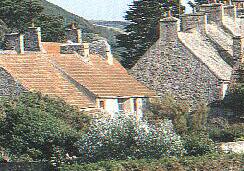 million charming details inviting you to say:” I love you, Normandy”. But don’t forget we are in the 20th, oops 21th century now,
and Normandy isn’t a wild, open cowboy country. Ultra-civilized and maintained
like an English garden. Parisians discovered this sweet music a long time ago,
foreigners do since a few years.
million charming details inviting you to say:” I love you, Normandy”. But don’t forget we are in the 20th, oops 21th century now,
and Normandy isn’t a wild, open cowboy country. Ultra-civilized and maintained
like an English garden. Parisians discovered this sweet music a long time ago,
foreigners do since a few years.
But this Normandy is the one I ‘m going to lead you and try to discover the
romantic and exotics under the impressive and mysterious silhouette of
Mont-Saint-Michel.
Let’s first start with what attract people most in Normandy: the D-day beaches
and war memorials.
Cote de Nacre, mother-of-pearl coast,
will be forever, simply, the D-day beaches for most visitors.
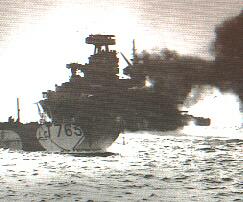 A coast bearing well
its name since the long stretched impressive chalk cliffs that break up from
time to time the wide open white sand beaches and which was the battlefield of
all the images we all have seen (in
papers or movies). Dream
beaches in a savage decor, that the German army---very little preoccupied by
ecology at that time--tried to drown into concrete. Combats were merciless, the
SS panzer divisions not hesitating to shoot all war prisoners they could capture
like 68 Canadian soldiers captured by the 12th SS Panzer division and
shot near the abbey of Ardenne near Caen. Moments of heroism deserve our
admiration, like the famous taking of the pointe de Hoc. Incredible technical
exploits, like the building of an artificial port in Arromanches. Military
catastrophes, like the slaughtering of American soldiers at Omaha beach.
A coast bearing well
its name since the long stretched impressive chalk cliffs that break up from
time to time the wide open white sand beaches and which was the battlefield of
all the images we all have seen (in
papers or movies). Dream
beaches in a savage decor, that the German army---very little preoccupied by
ecology at that time--tried to drown into concrete. Combats were merciless, the
SS panzer divisions not hesitating to shoot all war prisoners they could capture
like 68 Canadian soldiers captured by the 12th SS Panzer division and
shot near the abbey of Ardenne near Caen. Moments of heroism deserve our
admiration, like the famous taking of the pointe de Hoc. Incredible technical
exploits, like the building of an artificial port in Arromanches. Military
catastrophes, like the slaughtering of American soldiers at Omaha beach.
Today, the cleaned combat fields, the bunker-memorials, the museums and
reconstructed cities have nothing more in common with those terrible days of our
contemporary history.
The landing dented irrepressibly what
would otherwise be a long line of seaside-resorts and quiet ports devoted to
harvesting its excellent shellfish. These superb sites are now forever
associated with hundreds of blockhouses, an absorbing legacy of casemates,
memorials, museums and military cemeteries that stand at ease amid the beach
hotels, of what has become a popular summerly holiday destination.
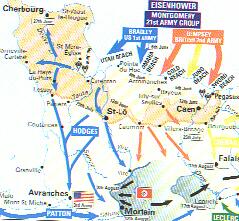
The traditional circuit links Ouistreham to Saint-Mere-Eglise, via Arromanches, Bayeux, Colleville and the pointe du Hoc. Several villages share the territories of the five coded beaches (Sword, Juno, Gold, Omaha and Utah), keeping numerous souvenirs of the Atlantic wall and the landings. I advise you to start the visit of all the sites related to the allied landing in Normandy by the indispensable "Memorial de Caen" and visit Caen of course at the same time, follow the estuary of the Orne until Ouistreham, then drive along the coast to Longues-sur-Mer. Make an obligatory incursion to Bayeux, and return to the coast again.
Bibliography
A holiday history of France, by Ronald Hamilton (London-Hogarth press), Region Normandie, ses merveilles, ses cicatrices, by Louis Letellier (ed. Cloison, Rouen 1995), Holt’s battle field guides, Normandy Overlord by Holt, Tonie and Valmai (Sandwich, Kent), La France des petits chemins: Normandie, by J. de la Valléé (ed. Cité presse, Paris 1998), Six armies in Normandy, by John Keegan, (paperback ed. Pimlico)
Back to Normandy main page and cities
Omaha beach
Pointe du Hoc
Utah Beach