|
The most conspicuous
blockade these days is the parked car in Paris. It is the centre of that
European continental sport (I don’t think the British are practizing this
one), the nudging forwards and backwards of the cars that prevent you having a
space to park. One of the three signs you might see sometimes (take care of it!)
is the one which warns of the risk of being towed away. The towing standards are
if you are considered to be “genant”, meaning mildly annoying. Throughout
the streets you will also come upon evidence of this essentially Napoleonic
taste fro edicts, simple instructions backed up by the date of the relevant law,
like the sinister citation of a law preventing sticking posters, dating from
April 1943 when Paris was occupied by some eastern neighbors. And the
folkloristic prohibition against drunkenness displayed in every bar
“Protection des mineurs et repression de l’ivresse publique”. Paris is
full of that sort of funny contradictions.
 Haussmann
is the architect of how Paris looks today. Appointed prefect of the Seine, he
was ordered half the 19th century to rebuild the city. If boulevards were very
popular for over 100 years, the Parisians would find their champion inn
Haussmann. He set to his task like a boy in a train-set, and with a blank cheque
he modeled boulevards, squares, streets, avenues, lanes, parks, bridges and
sewers with French taste and German system (he was of German descent). A lot of
historical architects and researchers deplore that sometimes, since Haussmann
pulled a great deal of old Paris down (the Marais was next in line to
go!). He looked at no expense to fulfill his goal and his buying prices were
such that people would readily give up their homes: Haussmann
is the architect of how Paris looks today. Appointed prefect of the Seine, he
was ordered half the 19th century to rebuild the city. If boulevards were very
popular for over 100 years, the Parisians would find their champion inn
Haussmann. He set to his task like a boy in a train-set, and with a blank cheque
he modeled boulevards, squares, streets, avenues, lanes, parks, bridges and
sewers with French taste and German system (he was of German descent). A lot of
historical architects and researchers deplore that sometimes, since Haussmann
pulled a great deal of old Paris down (the Marais was next in line to
go!). He looked at no expense to fulfill his goal and his buying prices were
such that people would readily give up their homes:
“How d’you afford your carriage, those clothes?” said Jean to Paul. “Oh,
I’ve been dispossessed!”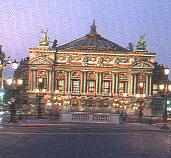 answered Paul.
Never a city map was redrawn so hugely. Small, narrow and winding streets, where
revolutionaries and other protesters could easily put up barricades and create
chaos, were torn wide open, without any mercy.He wanted and got a city with
splintering geometry of longavenues that meet in star-burst junctions (place des
Ternes, Place Victor Hugo) or round a great building like an exuberant but
organised dance (Opera Garnier, Madeleine, even the gare Saint Lazare).
Paris is also a city to be seen on the move. Try by any luck (they almost
disappeared but I saw some new ones lately) to hop on a bus that has an open
balcony at the back, and lean out to see Haussmann’s drama unfurl behind you,
a tremendous vantage point upon the world’s busiest stage.
|
