Monaco Monte Carlo, a police state Site Home - What's New? -Feedback - About Jack- Travel/Art Links

Cote d'Azur
|
Monaco Monte Carlo, a police state Site Home - What's New? -Feedback - About Jack- Travel/Art Links |
|
|
|
Cote d'Azur |
|
Monaco, a police state? |
|
Visiting Monaco-the Palace-the Cathedral and princess Grace
|
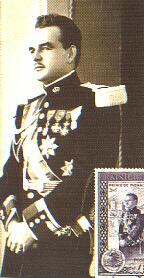
A lot has been said and written in a joking and ironic way about Monaco, although there is really nothing funny about it. In May 1993 the princedom was even accepted as member of the United Nations. Deadly serious men in black suits work their butts out in this small country (195 ha) to make a lot, a huge amount of money. From the almost 30,000 inhabitants there are only 5,000 real Monegasques who have, and only they have, the fierce desired and coveted Monaco nationality. Those 5,00 don’t have any army duties, can have agreeable and not too expensive housing and benefit from a broad-minded and generous social security system. The other inhabitants better watch out that they do nothing wrong, because who doesn’t follow the Monegascian rules is kicked out right away from the princedom!
If we look objectively to
what’s really going on and how Monaco is organized, it is nothing more than a
disguised police state, governed by the prince like a sort of dictator. But on
the other hand it is kept under silence and very, very few people will complain
about since there are so many advantages. Bibliography: Mary Blume, "Cote d'Azur. Inventing the French Riviera" (Thames and Hudson, London 1982) Stephen Liegeard, "La Cote d'Azur (Ed.Serre, Nice 1988), Patrick Howarth, “When the Riviera was ours” (Century, London 1977), Michel de la Torre, Alpes-Maritimes 06 (ed.Nathan, later Deslogis-Lacoste) |
Visiting Monaco-the Musee Oceanographique
Visiting Monte Carlo-Casino-Hotel de Paris-Jardin Exotique
|
 never hear about the parliament of 18 members, elected by the 5,000 genuine
Monaco citizens. Why should we, there are no “real” political parties in the
princedom.
never hear about the parliament of 18 members, elected by the 5,000 genuine
Monaco citizens. Why should we, there are no “real” political parties in the
princedom.