|
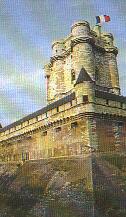 The
CHATEAU DE VINCENNES has always been a favourite hunting castle of the French
kings. It is said that Louis XI departed from this chateau on the Crusades to
the Middle East where he died in Tunis. The chateau extended and became a
genuine fortress like the English castles. But Philippe III (1274) and Philippe
IV (1322) married here and Louis X (1316), Philippe V (1322) and Charles IV
(1328) were born here. The dungeon of the castle had Henri de Navarre (the
future Henri IV) as a guest and also the famous superintendent Fouquet was
imprisoned here is 1662. Until Versailles The
CHATEAU DE VINCENNES has always been a favourite hunting castle of the French
kings. It is said that Louis XI departed from this chateau on the Crusades to
the Middle East where he died in Tunis. The chateau extended and became a
genuine fortress like the English castles. But Philippe III (1274) and Philippe
IV (1322) married here and Louis X (1316), Philippe V (1322) and Charles IV
(1328) were born here. The dungeon of the castle had Henri de Navarre (the
future Henri IV) as a guest and also the famous superintendent Fouquet was
imprisoned here is 1662. Until Versailles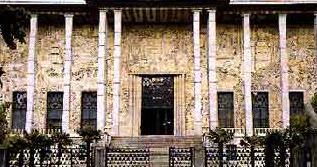 was built in the 17th
century, Vincennes was the residence of the French kings, especially because of
the pure air of the environment. Other famous prisoners came to lodge here like
Diderot, the marquis de Sade and Mirabeau. Much embattled during Napoleon's
capitulation and during the German occupation, (30 hostages were murdered on August
20th, year 1944 and four days later the nazis blew up the old casemates
and one of the pavilions was destroyed by fire). The renovations lasted for
dozens of years , but finally the chateau was renovated to its former
glory.
was built in the 17th
century, Vincennes was the residence of the French kings, especially because of
the pure air of the environment. Other famous prisoners came to lodge here like
Diderot, the marquis de Sade and Mirabeau. Much embattled during Napoleon's
capitulation and during the German occupation, (30 hostages were murdered on August
20th, year 1944 and four days later the nazis blew up the old casemates
and one of the pavilions was destroyed by fire). The renovations lasted for
dozens of years , but finally the chateau was renovated to its former
glory.
Now over to the avenue Daumesnil for the African and Oceanian art amateurs!
The musee des ARTS D'AFRIQUE ET D’OCEANIE . This museum, completely
underestimated but anyway remarkable, is quite difficult for persons without
patience and hating standing all the time. But it has a fascinating collection
of African and Australasian art. Picasso used to come and wander the displays,
seeking inspiration.
The fact that it was called Musee des Colonies gave it a bad image after the liberation
of the colonies. It became the scene of a political argument, when the museum
was accuse of celebrating colonial oppression. But today, the displays are
politically correct and Nigerian death-masks, Algerian jewels and South
Pacific fertility symbols.
The
Aquarium section is the easies to visit and the most spectacular and popular. You
will see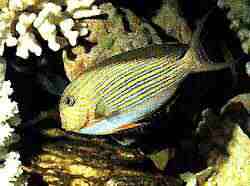 all types an sots of fishes (like rarely moving crocodiles). It is much favored
by children, who gasp in awe at the baby sharks, turtles, cat-fish and the
crocodile-pit.
all types an sots of fishes (like rarely moving crocodiles). It is much favored
by children, who gasp in awe at the baby sharks, turtles, cat-fish and the
crocodile-pit.
A great renovation effort puts it now at
international level with, very rare, a collection of primitive fish, unchanged
since 300 million years!
Wonders of nature ….
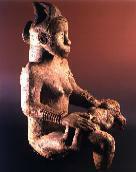 The
collection of African Arts is to find on the first floor with admirable little
statues, seated "Yoruba chief" , Ibo from Nigeria, magical statues from Congo (with nails), superb
bronzes, a giant parade pipe from Cameroon, initiation masks, musical
instruments, more wooden sculptures, statues, masks and ceremonial clothes from
the 12th and 13th century and from Black African and
beautifully executed jewels from North Africa. Take some time to look over the details and the manner of African Art.
Quite astonishing! It's a mixture of conventional style and abundant exoticism,
flamboyant, poetic. This art of Central Africa testifies the brilliant civilization
that existed . The
collection of African Arts is to find on the first floor with admirable little
statues, seated "Yoruba chief" , Ibo from Nigeria, magical statues from Congo (with nails), superb
bronzes, a giant parade pipe from Cameroon, initiation masks, musical
instruments, more wooden sculptures, statues, masks and ceremonial clothes from
the 12th and 13th century and from Black African and
beautifully executed jewels from North Africa. Take some time to look over the details and the manner of African Art.
Quite astonishing! It's a mixture of conventional style and abundant exoticism,
flamboyant, poetic. This art of Central Africa testifies the brilliant civilization
that existed .
The Oceanian arts are sited around the immense festival hall decorated by
frescos and are also a quite surprising discovery.
Masks of New Guinea, in rich materials, engraved bamboos, very nice
ornaments and headdresses and a lot more….
Another hall is especially dedicated to Australia. I leave you the surprise to
see it by yourself. ---
On the second floor the Arts of the Maghreb are displayed. Rich with geometrical
motives, enhanced with vegetal elements, this art is remarkable by its arms
collections, sumptuous jewels (16th -19th century), its Fes ceramics and
embroidered costumes.
Bibliography
--Vie et histoire des arrondissements de Paris, ed.Hervas
(1985-1988--Nouvelle Histoire de Paris, ed.Hachette--Le Pieton de Paris, by
L.P.Fargue, ed.Gallimard 1997--Dictionnaire historique des rues de Paris, by
J.Hillairet, ed.Minuit --Guide du Routard 1998-1999 (Ed.Hachette)--Paris, 2000
d'histoire, by J.Favier, ed.Fayard 1997 --Paris 19eme siecle, l'immeuble et la
rue, by F.Loyer, ed.Hazan, 1994-
Le 12eme et ses secrets, J.Favier( ed.Natah 1996)—Chateaux de Paris, by
J.de la Vence( ed.Minuit 1996)-Musees oublies, (office de Tourisme de Paris)
|
