|
Tuileries in Paris, all the visits and park scultures Site Home - What's New?-Feedback - About Jack-Travel/Art Links |
|
|
|
Tuileries Jeu de Paume-Jardins du Palais royal Place Vendome Place des Victoires Ile
de la Cité Sainte-Chapelle Pont Neuf-Saint Germain l'Auxerrois Quai
de la Megisserie
|
Paris 1st arr-1st arrondissement-Tuileries |
|
|
| ...discover PARIS THROUGH THE AGES in the very best way possible :on foot with your own personal guide !!!!! | Studio to rent in the Marais! Short term rental, direct owner, no fee, personal reception and free courteous help! | ||
|
But let's get on. Rue de Rivoli first, until the MUSEE DES ARTS DECORATIFS. Superb objects, furniture, plates and dishes from the Middle Ages until 1980. Not a highlight of the Paris museums but amateurs of nice ancient objects can find some nice objects to look at. At the same address the MUSEE DE LA PUBLICITE.
On each side of the west exit of the jardin, the pavilions of the "Musee de l'Orangerie" and the "MUSEE DU JEU DE PAUME". MUSEE DE L'ORANGERIE closed for renovations at the moment until end 2003. Anyway, I owe you some decription. It is an underestimated museum by the French, I don't understand why, since this museum possesses an astonishing collection of beautiful paintings, mostly impressionist, some expressionist or tortured like the ones by Soutine. At least here you can walk quietly, without queuing, and admire the works of Renoir, Cezanne, Monet, a few marvelous Picasso's, Matisse, Derain, Utrillo, etc.... The rooms are of a humane size, no big and high ceiling galleries where you feel like an ant, perfect lighting, all this contributes to make it a museum to be visited by humans like we are all. And what to say about the unique display of Soutine’s paintings? Twenty-two works of an extremely tortured mind, of a depressive Jewish painter of Lithuanian origin, who had seen and suffered so much in his short life that he could only express it this unequalled way. It’s an expressionist before the word was even popular and it hits you right in the face.
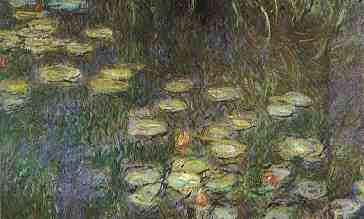
paintings where the artist tried to seize the special lights in his garden of Giverny and the way it changes all along the day. Did you never notice that Monet (see his Cathedrale de Rouen and haymill paintings, not in this museum!) painted several times with different degrees of shade and tonality? Anyway, the halls were you can admire the Nympheas were built especially to house these works. |
|||
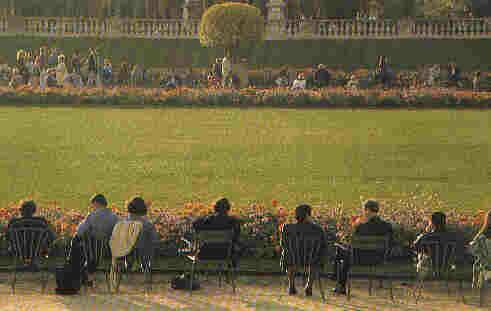
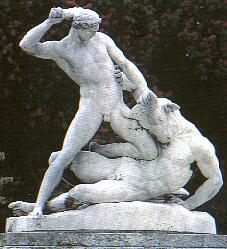 promenade! 28 hectares of surface, it houses numerous sculptures. They even added during the year 1999 a few contemporary ones like Henry Moore, Gleizes, Jacques Lipschitz, Miro, Dubuffet and others.
But you can also loiter between the works of Maillol or admire the (fake) equestrian statues of Coysevoix. When you arrive at the terrace "Bord de l'Eau" you can see al sort of electric water devices like ships operated by remote control. Not only children but also grown ups spend the nice and sunny days here. You will also meet joggers, intellectuals seeking inspiration and when the "Foire des Tuileries" has its maneges and barracks all over the entrance of the gardens on the
Concorde side, it turns into a gays or lesbian pick up place! (as soon as night falls).
promenade! 28 hectares of surface, it houses numerous sculptures. They even added during the year 1999 a few contemporary ones like Henry Moore, Gleizes, Jacques Lipschitz, Miro, Dubuffet and others.
But you can also loiter between the works of Maillol or admire the (fake) equestrian statues of Coysevoix. When you arrive at the terrace "Bord de l'Eau" you can see al sort of electric water devices like ships operated by remote control. Not only children but also grown ups spend the nice and sunny days here. You will also meet joggers, intellectuals seeking inspiration and when the "Foire des Tuileries" has its maneges and barracks all over the entrance of the gardens on the
Concorde side, it turns into a gays or lesbian pick up place! (as soon as night falls). 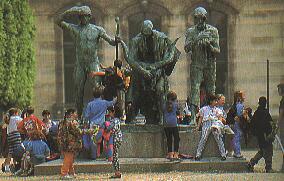 Ok, we are now at the exit/entrance and face the famous place de la Concorde. Let's admire it in silence, although the constant traffic noise will make that difficult ;-). Attention, we are in the 8th arrondissement and this walk is supposed to continue the 1st arrondissement! So we will describe the Concorde more extensively in another article.