|
When we leave Arles,
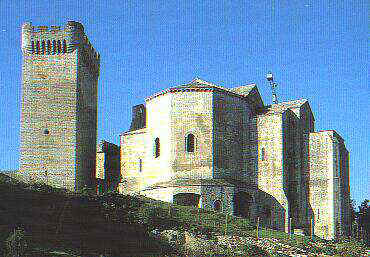
direction Tarascon at the edge of the Camargue is l’ABBAYE DE MONTMAJOUR. This
fortified abbey was founded in the 10th century and got to its
present form 200 years later. Besides having had a hectic existence the site is
exceptional where surrounding nature is in perfect harmony with the
architecture. Only a few hermits for a start and started the building of the
abbey. The complex is so heavy to protect the inhabitants against attacks from
Arabian pirates. It is located on a hill, shadowed by pine trees, amidst
extensive rice fields. Swamps surrounded the area but later monks dried out them
out.
 |
|
Abbaye de Montmajour
|
The walls seem really
threatening. When Van Gogh walked from Arles to this abbey ruins about 9th
of March 1888, he wrote his brother Theo that he “had seen beautiful things:
the ruins of an abbey on a hill, planted with holly, pines and grey olive trees.
We will soon take this into our hands, I hope.”
When Van Gogh notices how easily the light can change every hour in this sort of
Provencal landscape he writes on May 28 to Theo. “ It’s funny. I have seen
one of these evenings a red sunset on Montmajour that shined on tree-stumps and
branches of pines enrooted in a rocky mass, which provoked a heavy orange colour
to these branches and stumps, while other pine trees, standing more in the back,
looked Prussian-blue against a soft grey-blue sky. It was like a Monet effect:
extraordinary! The white sand and the white rocky layers under the trees took
over that bluish tints.”
In the Amsterdam Van Gogh museum you can see a drawing of this period:”La Crau,
seen from Montmajour” and in the British museum the work “Landscape at
Montmajour with a train”.
But
let’s get to the 12th century. Since it was said that a splinter of
the Cross was present in the abbey, thousands of pilgrims stormed the place. A
witness tells that in 1409 150,000 pilgrims rowed over the water to honour the
splinter and to make a donation in exchange of the famous “Pardon de
Montmajour”. To increase the effect of holiness, the monks built a Chapelle
Sainte-Croix out of the abbey walls. The reliquary had now its own shrine.
The most impressive inside this complicated complex is undoubtedly the crypt of
Notre Dame of end 12th century. But after a few centuries of strict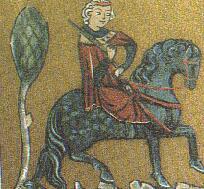 monk abbey life, decadence started .
Popes and kings
In the 17th century couldn’t keep their hands in
their pockets and all what Montmajour had became sort of present for futile
cardinals who never set a foot in Montmajour and couldn’t care less for the
intern order. The building collapsed partly in the 18th century, when the
head abbot , Cardinal de Rohan, became entangled in a scandal concerning the
famous necklace of Marie-Antoinette. When French revolution wanted to sell the
property only a few monks still lives on the premises .The property was finally
bought and stripped by antique dealers. A real estate merchant buys it later and
rents it in parcels to small farmers. Finally, only a few walls remained and even these people hacked as madmen as if
it was a stone quarry. End 19th century the protest against the
humiliating state of the abbey got finally to some important people. Restoration
began in 1872, but it still looks like a movie facade: grand from the front,
empty from the back. In 1985 the State takes it over.
The enormous 12th century church of the abbey is one of the most elaborate
Romanesque churches in Provence. It possesses a never completed nave considered
one of the masterpieces of Romanesque art. The central crypt, above ground,
forms a perfect circle with five evenly radiating chapels. Visiting the cloister
outside will offer you a wonderful view of the outlying countryside.
Bibliography
A guide to Provence, by Michael Jacobs (Viking, London 1988), The Ventoux
summit., the secret, by Petrarca (Ambo, Baarn 1990), Mémoires d’un touriste,
by Stendhal (Pleiade, Paris 1992), "Guide
de la Provence mysterieuse" and "Provence Antique"by Jean-Paul
Clebert (Ed.Sand, 1986 “Aspects of Provence, by Pope-Henessy James (Penguin
Travel 1988-Guides du Routard, (1999)-Old Provence, by Theodora Cook (Rivingtons,
London 1914), Monuments historiques, inventaire, description, histoire, by
Marcel Prade (Errance-Brissaud, Paris-Poitiers 1986)
|