Site Home - What's New? -Feedback - About Jack- Travel/Art Links

Venice
|
Site Home - What's New? -Feedback - About Jack- Travel/Art Links |
|
|
|
Venice |
|
Venice visit-Canal Grande-Left bank-More palaces up to San Marco-The end |
||||||||||
|
Santa
Maria
Peggy
|
From Fondaco dei Turchi to Palazzo Tiepolo Papadopoli
From Ca' Loredan to Ca' Rezzonico
Ca' Rezzonico to San Marco-End of Canal palaces
|
|||||||||
|
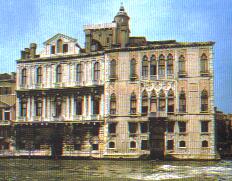
Just a quick look at the next palazzo: the PALAZZO CONTARINI DAGLA SCRIGNI, a doublepalace. The first scheduled by in 1610 by Vincenzo Scamozzi to enlarge the second. This second palace was refurbished in the 17th century by Francesco Smeraldi. The palazzo housed a fabulous painting collection, bequeathed in 1838 to the Accademia museum, which is not far anymore.
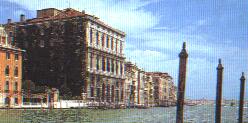
Next to it the PALAZZO CORNER DELLA CA' GRANDE, an impressive (Ca' Grande means big house!) but pretty classicist-Renaissance palazzo built by Sansovino for the wealthy Corner family between 1532 and 1561. Yes, this means almost 30 years. The interior is sumptuous and is the siege of the Venetian prefecture. Bad tongues say that the Corner family built this impressive palace only to block the view of the Ca' Venier dei Leoni, house of their worst enemies.
Next the PALAZZO GRITTI, today the famous, sumptuous hotel Gritti. . Originally a gothic edifice of the15th century whose façade was enhanced by sculptures of Giorgione. It is incredible how beautiful this building is as well as its waterside as on the side of the Campo Santa Maria del Giglio. It belonged to the doge Andrea Gritti, multilingual and shroud politician, successful military commander and famous woman chaser. (You see there is nothing new under the sun!). A well beloved guest here was Somerset Maugham who wrote on its terrace "Few things are equally wonderful as sitting here, while the sun goes down and immerse the Canal in bright colours". Hemingway also was a "habitué" in this hotel. Behind the palace, in profile, a church bearing the same name.
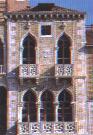
PALAZZO CONTARINI FASAN, fourth façade after the Rio Alberto, facing the Santa Maria della Salute on the other bank, is a smaller edifice, richly decorated with flamboyant gothic architectural elements (1475). Notice the drawings on the first floor, very interesting. The legend (or truth?) says that this palazzo was the birthplace of Desdemona, seducing daughter of a Venetian senator, who later married the very jealous Othello. |
||||||||||
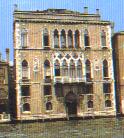 The second palace after Rio Malpaga is the PALAZZO LOREDAN, a gothic construction with a particularly elegant Renaissance façade (1536). Don Carlos di Borbone, pretending to the throne of Spain lodged there at the end of the 19th century. It is also called "dell' Ambasciatore" because it was the residence of the Roman ambassadors in the 18th century.