Col d'Allos, Barcelonette Site Home - What's New? -Feedback - About Jack- Travel/Art Links

Haute Provence
|
Col d'Allos, Barcelonette Site Home - What's New? -Feedback - About Jack- Travel/Art Links |
|
|
|
Haute Provence |
|
Jack's Provence travels |
|
B B Riez and Moustiers-Sainte-Marie From Castellane to Saint-André-les-Alpes
|
Haute Provence-Col d'Allos-Barcelonette |
|
||
| hotel recommendations | ||||
|
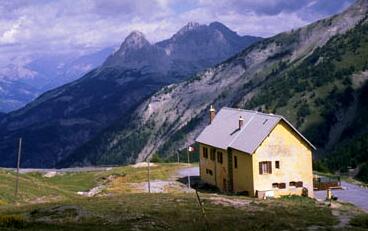
Leaving Colmars, taking the D 908, we drive now to ALLOS, 8km north, at an elevation of 1425 m. The changment of landscape will be total: from a still languishing and listless world to a hard and rogue mountain environment. Just put your arm out of the car window to feel the already cooling air. Don’t worry, it’s not the Himalaya and you don’t need a scarf and gloves, except when winter is near. But admit that you are moved by the majestic landscapes, just at the limit of the parc de Mercantour.
We start the climb to the
COL D’ALLOS, passing first through LA FOUX D’ALLOS, with the Mont Pelat at
our right side. The road is narrow, even intimate, and very popular with bicycle
riders having a strong heart, muscles and voluminous lungs.
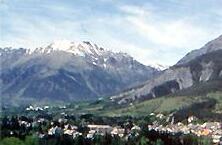
The town owns its name to
its 12th century rulers, the counts of Barcelona, who founded it in
1231. But the Hispanic connection doesn’t’ end here. In 1821 the three
brothers Arnaud emigrated to Mexico out of poverty, looking for the Eldorado.
They opened a textile shop there and when they had success they prompted a
period of migration for many who would follow their example. More than 5,000 are
estimated to have tried their luck. A lot of them made a fortune and returned
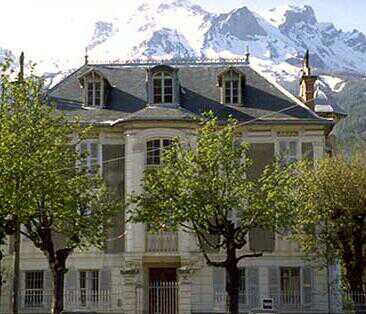
later to Barcelonnette to show off a bit and built incongruous Mexican-style
villas for which the town is famous. Bibliography A guide to Provence, by Michael Jacobs (Viking, London 1988), "Guide de la Provence mysterieuse" and "Provence Antique"by Jean-Paul Clebert (Ed.Sand, 1986 “Aspects of Provence, by Pope-Henessy James (Penguin Travel 1988), Guides du Routard, (1999) –« Towns in Provence », by M.F.KFischer (New-York-Vintage books 1983), « Regain » by Jean Giono, « Hannibal’s footsteps » by Bernard Levin (Sceptre paperback 1987) |
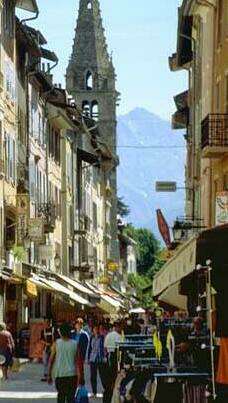 selling
Mexican artefacts but a new flavour has emerged to dominate the atmosphere and
preoccupations of the town: skiing. From December to April the modern ski
resorts of Pra-Loup and Super-Sauze, just south of Barcelonette, pack the Ubaye
valley with international tourists and bring a welcome upturn in local fortunes.
selling
Mexican artefacts but a new flavour has emerged to dominate the atmosphere and
preoccupations of the town: skiing. From December to April the modern ski
resorts of Pra-Loup and Super-Sauze, just south of Barcelonette, pack the Ubaye
valley with international tourists and bring a welcome upturn in local fortunes.