Site Home - What's New? -Feedback - About Jack- Travel/Art Links

Venice
|
Site Home - What's New? -Feedback - About Jack- Travel/Art Links |
|
|
|
Venice |
|
Venice visit-Canal Grande-Ca' Grande and first acquaintance with the museum (1) |
||||||||
|
Santa
Maria
Peggy
|
From Fondaco dei Turchi to Palazzo Tiepolo Papadopoli
From Ca' Loredan to Ca' Rezzonico
Ca' Rezzonico to San Marco-End of Canal palaces
|
|||||||
|
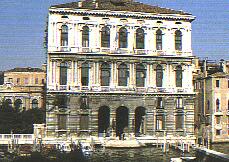
Up again the Canal Grande upwards to Rialto. The first palazzo we see on the right side is the“PALAZZO CORNER, said CA’GRANDE”.
Remember, the ones who
attacked the builders of the Venier dei Leoni for blocking them the view of
Venice. It owes its name to its “Grand” proportions and dimensions. It was
built for the powerful Corner family in 1532, suspected to have reached its
immense wealth to very irregular transaction one would get a life sentence in
jail today. It houses today the siege of the Venice province council.
Next stop, the PONTE DEL
ACCADEMIA and a visit to the world famous GALLERIA DEL ACCADEMIA (open every day
9.00-19.00 and 9.00-14.00 on Sunday and festive days).
A useful advice: since you
have to look at the paintings in daylight, try to pick a clear morning for your
visit. Try the earliest (9.00). Later the long queues will put your patient (?)
nerves trough an ordeal. And be also aware that it is IMPOSSIBLE to see all the
works in one visit. Even running ;-). Let me advise you a good local guide of
the museum: “The Galleries of the Accademia” by Francesco Valcanover, to buy
in the museum shop.
It is said that
Michelangelo once sighed: “ If those Venetians could start to draw and sketch
very, very young…..”. Maybe they were not that good draughtsmen but they
sure knew how to paint!! Other master pieces: ”Madonna dell’Arancio” by
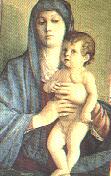
Cima da Conegliano. Gallery 2 houses one of the most important altarpieces of
early Renaissance: “Madonna in trono con bambino con Santi” by the genial
Giovanni BELLINI. He was the brother in law of MANTEGNA who introduced
Renaissance style in Venice. This painting had a great influence on Carpaccio
“Mission in the Temple” and Basati’s “Christ in the Gethsemane garden”
to be seen in the same room. Bibliography Italian hours, by James
Henry-Venice, a traveller’s companion, by John Julius Norwich-The Companion
guide to Venice, by Hugh Honour-Venice and its lagoon, by Giulio Lorenzetti. |
||||||||