Site Home - What's New? -Feedback - About Jack- Travel/Art Links

Venice
|
Site Home - What's New? -Feedback - About Jack- Travel/Art Links |
|
|
|
Venice |
|
Venice visit-Canal Grande-More beauty and stunning works in the Galleria (2) |
||||||||||
|
Santa
Maria
Peggy
|
From Fondaco dei Turchi to Palazzo Tiepolo Papadopoli
From Ca' Loredan to Ca' Rezzonico
Ca' Rezzonico to San Marco-End of Canal palaces
|
|||||||||
|
Entering room 4 Bellini’s “Madonna in trono col Bambino i santi” will introduce you how Venetian painters played with light. The same room shows the cool rationality of the Quattro cento with a suggestive “San Giorgio “by Mantegna. More works by Bellini in gallery 5 of which the cute” Madonna with the bushes”.
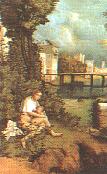
A suggestive “Pieta” by Bellini has a very realistic background. But the masterpiece of this room is undoubtedly “La Tempesta” (the storm) by Giorgone, one of the top works of Italian Renaissance, with an extreme modern tendency in the rendering of nature. Little is known about Giorgone, except that he died very young of the black plague, which doesn’t take away that he is considered as one of the forefathers of modern art. The part he gave to light and air was revolutionary at that time, especially when he subdues the trace of his pencil to the use of the colour.
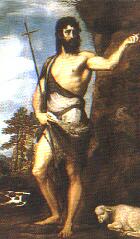
Galleries 6, 7 and 8 are dedicated to works beginning 16th century when Italian Renaisance was fully developed. Tiziano Vecello shows Saint John Baptist as a muscular type in a theatrical pose. It’s Tiziano who ruled on Venetian painting in the 16th century after the death of Giorgone (1510). Lyrical compositions and delirious use of colours. Have a look at other works by Bordone and Palma Vecchio.
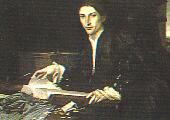
Full of symbolism is the “Portrait of a young man in his study” by Lorenzo Lotto on the left wall of room 7. Take now a stair leading you to room 10. Three famous Venetian masters: “A banquet at the house of Levi” by Veronese. Originally this work was meant as a “Lord’s Supper” with all details prescribed by a religious court, but Veronese changed it into “banquet”, where the presence of Mores, farm boys, dwarfs, drunks and dogs didn’t bother him.
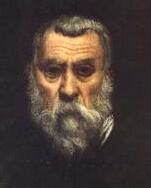
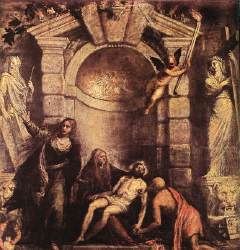
Tintoretto (1518-1594) was a fanatic, religious man and introduced an almost exaggerated mannerism in Venetian Renaissance. A remarkable “Liberation of slave by Saint-Marcus” and other works. Tiziano Vecello is present again with his last work, a soberly executed “Pieta”,that he destined for his own tombstone, tortured as he was by plague and fear of death, exchanging his vivid colours to unusual sinister tones.
In the long corridor leading to gallery 11, see a “Kidnapping of Europe “ by
Zucharelli. It’s in gallery 11 that most of the museum’s master pieces are
gathered: immense Tiepolo like “ Cross elevation” (vertiginous movement
towards the sky, the personages look like being aspired) and a “Saint Helena
discovers the Real Cross”. It’s here that Veronese works explode in all its
colours and genius. Magnificent canvasses like "The mystic marriage of
Saint-Catharine”, “Madonna on a throne with saints”, and the extraordinary
“Battle of Lepanthus”. Tintoretto’s spirituality is evident in the
admirable “Creation of the animals” (ah, what a movement, what a rhythm). Bibliography Italian hours, by James
Henry-Venice, a traveller’s companion, by John Julius Norwich-The Companion
guide to Venice, by Hugh Honour-Venice and its lagoon, by Giulio Lorenzetti. |
||||||||||