|
Site Home - What's New?-Feedback - About Jack-Travel/Art Links |
Belgium |
| Main
Antwerp page
Antwerp by foot, its insolent and secret treasures Introducing the walk Keyserley-Leysstraat-Meir Meir shopping, slowly loitering to Rubens house Rubens, his life and his house Bird market-Bourla theatre - more shopping Shopping streets to Groenplaats Hoogstraat and Grote Pieter Potstraat Printers museum Plantin-Moretus Museum Mayer
v.d.Bergh Strolling to the Carolus Borromeus church Rockoxhuis- Rubens tomb at St.Jacobskerk Cogels-Osylei area, unique in the world (1) Cogels Osy area, unique in the world (2)
|
You
want to see great class art? Just walk to the Lange
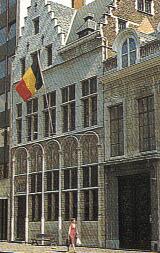
Gasthuisstraat 19 and enter the MUSEUM MAYER VAN DEN BERGH.
In this world there are some collectors who are touched by “grace”: Fritz
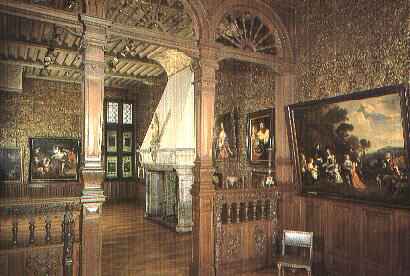
Mayer van den Bergh, who died in 1901, 43 years old, was one of them. After his
death, his mother built this jewel of a house in neo-gothic to preserve his
precious collection of medieval art and Renaissance. She hired an Antwerp
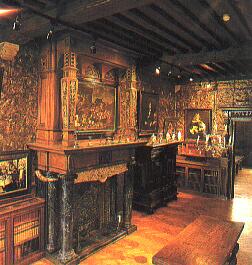
architect, J.Hertogs, for the job. Even empty, this edifice merits a visit, if
not only for its multi-coloured marble fireplaces but also for its brocaded
hangings and its richly sculpted wainscoting!
Take your time because this collection equals
manyothers in National museums You can only see art of the highest quality,
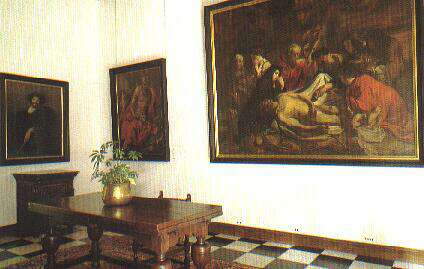
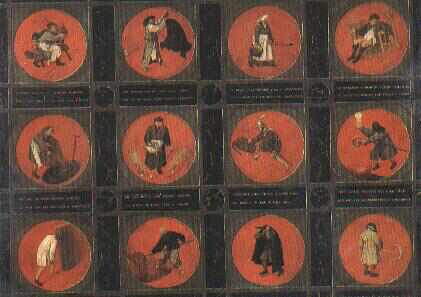
famous names were not important for Mayer van den Bergh. The collection assembles 3098 art objects and 2,000 medals and coins. Superb the two original Pieter Breughel the Elder paintings: “De Dulle Griet” and the “Twelve Proverbs”. This Dulle Griet painting, maybe one of the most important in the world was bought by Mayer van den Bergh in a sale of a Koln for three times nothing. Breughel was not so much appreciated at that time but Mayer understood right away the quality of the painting. He was a very keen collector and Antwerp owes him a lot.
It’s an extraordinary representation and allegory
of Madness, Vice and Stupidity, and above all, the denunciation of the horrors
of the Spanish Inquisition. You see a terrifying mad woman with a hell’s
background: I never saw a more realistic and anguishing evocation of the horrors
of war. Next to it “The Twelve Proverbs”. In the same room and floor works
of Pourbus, Van Orley, Frans Hals, Luc Devos, David Teniers, Joos van Cleve and
Jacob Jordaens. Stop a moment is hall 4 to admire the “Calvary” triptych of
Quinten Metsys (the man of the well in front of the cathedral). For the rest,
juts wander through the house and
There is a
display-window showing a few of these cards, or sometimes the two parts
assembled. In the same museum you can see more works of Rubens, Van Dijck,
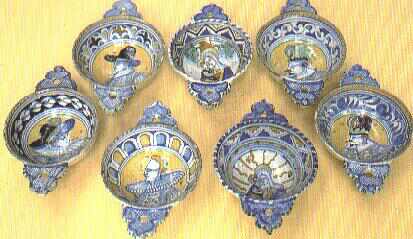
Jordaens, Van Veen. And Antwerp and Dutch ceramics….The highlight of the
collection is the coloured tin glazed pottery of the 16th century. |
 retables of the
Passion skirt the statues of Evangelists. The top items of the museums are
without any contest
retables of the
Passion skirt the statues of Evangelists. The top items of the museums are
without any contest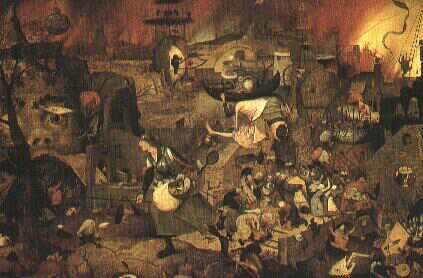
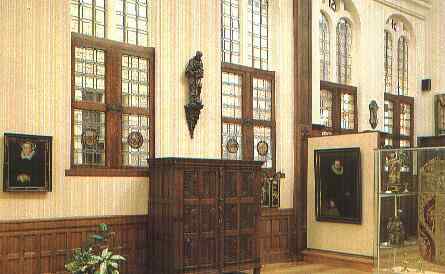 admire the huge collection of paintings,
sculptures,
admire the huge collection of paintings,
sculptures,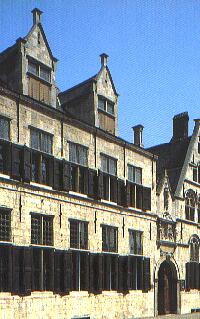 etchings, manuscripts, coins….