|
Louvre Flemish painting Paris Site Home - What's New?-Feedback - About Jack-Travel/Art Links |
|
Louvre Introduction Flemish painting section
More foreign paint section
|
Paris-Flemish painting section |
||||
| ...discover PARIS THROUGH THE AGES in the very best way possible :on foot with your own personal guide !!!!! | Studio to rent in the Marais! Short term rental, direct owner, no fee, personal reception and free courteous help! | ||||
|
First let’s have a look at the painting sections of the northern schools. In the layout of the New Louvre these paintings were moved and are now on the second floor of the Richelieu wing. In Galleries 1, 2, 3 you will still find French painting of the 14th century but from room 4 up the Flemish and Dutch masterworks will be for the pleasure of viewing. Notice the revolutionary way of letting the light in (ceilings are inclined panels); lighting which is particularly benefiting for a better view of Flemish and Dutch paintings.
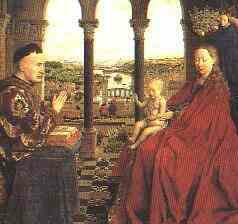
A good start is given with two enchanting and incredible capital pieces: “Le Vierge
d’Autun” (1435) by the Flemish Jan van Eyck and the “Braque Triptych” by Rogier van der Weyden, father and absolute master of the Flemish primitives. Notice the luminous and exquisite landscape in the background. A great novelty introduced by Rogier Van der Weyden was to use oil painting on canvas. Between the works of the second half of the 15th century, several Memlinc (another Flemish, staying in Bruges) will flabbergast the connoisseurs: best example is “Portrait d’une femme agée” (1470-1475). “Le Preteur et sa Femme”, by Quinten Metsys (the guy from the well in front of Antwerp cathedral). From galleries 7 up to 20, you will
buzzing with life, taken by a lot of other artists as example and study object (Watteau, Fragonard, Delacroix….). |
|||||
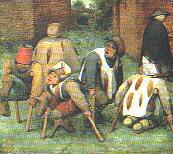 encounter: the “ Mendiants” (the beggars), by Pieter Brueghel the Elder, being an allusion to the “geuzen “ revolt against the cruel ruling of the Spanish king Philippe II in the Netherlands.” The card Player" by Lucas van Leyden and a few master works by Durer and Cranach.