
|
Louvre Italian painting section Paris Site Home - What's New?-Feedback - About Jack-Travel/Art Links |
|
Louvre Introduction Italian painting section
|
Paris-Louvre-Italian paintings |
||||
| ...discover PARIS THROUGH THE AGES in the very best way possible :on foot with your own personal guide !!!!! | Studio to rent in the Marais! Short term rental, direct owner, no fee, personal reception and free courteous help! | ||||
|
The best foreign painting section represented in theLouvre is the Italian one.All phases, from the second half of the 12th century to the end of the 18th century, have their examples. The splendour of early Italian painting is illustrated right away with two big panels by CIMABUE of the Florentine school:
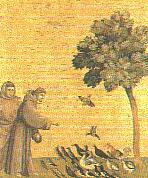
“Vierge aux Anges” (1270). Also a “Saint François d’Assise recevant les stigmates” (1300) by GIOTTO. SIMONE MARTINI, from Siena, with a « Cross bearing » painted when he
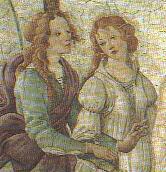
resided in Avignon (1340-1344). They opened, after having it completely restored, two galleries next to the staircase leading to the” Samothrace” totally refit and climatized. You will be able now to admire six newly restored frescoes, two from BOTTICELLI but also from newcomers: a magnificent Calvary and crowning of the Virgin, by FRA DE ANGELICO, and three LUINI, a pupil of Leonardo da Vinci.
Talking about Boticelli, he was torn between humanism and Christianity, which is to see in his two major compositions here, the sharp and sinuous trace, delicate and transparent colours, extremely refined style, the grace in faces that are sad and mysterious. Good news never coming alone, these superb frescoes are only an announcing preface of more marvels to come. Indeed, the total Italian itinerary, lost and disturbed during several years, has been reorganized and has finally the chronological layout it needed again. Bibliography The Louvre, Seven Faces of a Museum-The Louvre (Collection Guides Gallimard)- The Poetics of Portraiture in the Italian Renaissance by Jodi Cranston, (2000)-The Study and Criticism of Italian Art : First Series by Bernhard Berenson (1920)-Bildnis und Individuum : uber den Ursprung der Portratmalerei in der italienischen Renaissance, by Gottfried Boehm, Art of the Italian Renaissance, by Chastel Andre. |
|||||
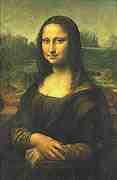 A lot has been said already about the Mona Lisa, painted in 1503 and 1505. Da Vinci was so attached to this portrait that he took it with him when he decided to stay in France, near Amboise, at the chateau de Cloux, where he died three years later. The painting became the most precious item of the “cabinet des tableaux of the king”. In this cabinet works by RAPHAEL were also well represented. Maybe the most beautiful: La Vierge a l’enfant avec Saint-Jean Baptiste”., traditionally called « La Belle Jardinière ».