|
Place des
Vosges Jewish area-Rue des Rosiers Carreau du Temple -market-Musee du Judaisme Village Saint - Paul Hotel de Sens Ile
de la Cite
|
Paris -4th arr-Marais-Jewish area-Rue des Rosiers |
New naughty and horrible anecdotes
|
|||||
|
|
|||||||
Covered in the 12th century with wild rose bushes, the rue des Rosiers is the heart of the Jewish area since the Middle Ages. It is now one of the most attaching and lively areas of the Marais. Since hey made money and had some fortune, they were envied by the non -Jewish and expelled for a while. But the French Revolution gave them permission to return. In 19th century, the rue des Rosiers became the center of the Ashkenaze refugees (Central Europe), fleeing bloody pogroms, so called unprovoked but in fact duly organized by the official authorities. And you can imagine what happened between 1930 –1940 when nazism took over in Germany and Austria. One of the
most revolting pages of French history was written here on the 16th of July 1942
with what stayed a shame and black spot on French history: the "Rafle du
Vel'd'Hiv". About 4,500 French policemen, lead by René Bousquet arrested
13,000 Jews at their homes, mostly from the rue des Rosiers and quartier Saint-Paul
. Older men, women, children, babies, all were
assembled in the old Velodrome d’hiver (sort of covered cycling stadium),
transported to Drancy and handed over to the S.S. and deported by cattle trains
to various destinations like Auschwitz, Birkenau, Bergen –Belsen and more of
these “resorts”.11,000 never came back.
When you
enter the area today, you will notice that the "Ashkenaz" Jews are
outnumbered today by the "Sepharad" ones (from North Africa).
But it stays a like a picturesque
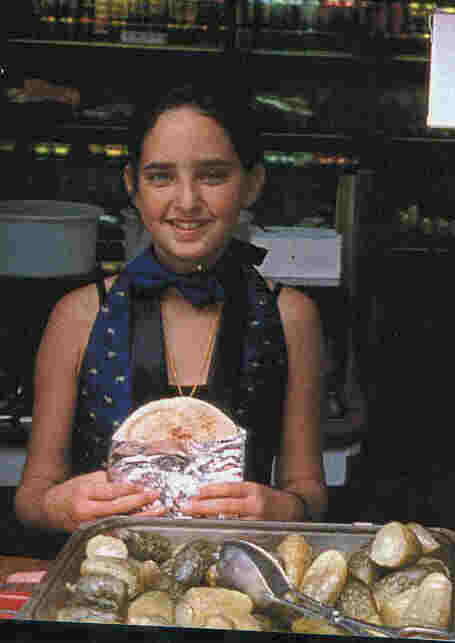
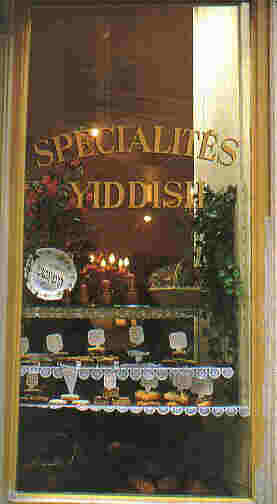
village: the "kosher" shops, with ritual products, oriental
specialties, libraries and boutiques selling cult instruments, without
forgetting the snack-bars and restaurants "Jo Goldenberg"(rumors said they might close down) and the pastry
parlor "Chez Finkelsztajn", 27 rue des Rosiers.
All this with
Yiddish language as background, traditional Hebrew music and Hebrew inscriptions
everywhere. Ancient houses, often pretty, constantly in activity with people of
which everybody knows everyone. Jewish solidarity is not a vain expression.
But lately, chic boutiques are trying to buy out small commerces and to "
embourgeoise" the sector. The modern trends succeeded to set a foot
even here. The beginning of the street is modernizing lately and housing trendy
clothing boutiques. But if you walk a little further you'll see the food sector
with its restaurants, cafes and hotels also spreading rue Alexandre Duval and
rue des Ecouffes. Bibliography:--Vie
et histoire des arrondissements de Paris, ed.Hervas (1985-1988) |
|||||||