|
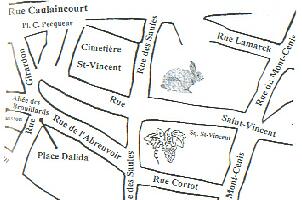
PLACE DALIDA, at the angle
of the rues Girardon and Abreuvoir. Inaugurated in 1997 this square is dedicated
to Dalida. 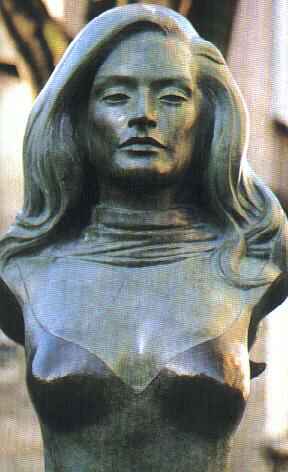 Who
is she? A glorious and very famous female singer, born in a modest village near
Cairo, Egypt in 1922 with her real name Yolanda Gigliotti. Becoming Miss Egypt,
she plays a few roles in the movies, which will be her first vocation. Taking
her artist name “Dalila” out of the bible and deciding to build out her
first successes, she immigrates to Paris in 1954 to look for glory and
celebrity. Luck gets her into the cabaret Villa d’Este, where she sings every
night and changes finally her name to Dalida. She is noticed by Bruno Coquatrix,
director and manager of the “Olympia” (the Apollo theatre of Paris) who
invites her for a recital. Her career is on the tracks: her first success:”
Bambino” will shoot her to the stars…18 months later a star was born and
Dalida entered into the legend alive! She had the intelligence to adapt the
style of her songs through the years as trend was at that moment. She starts
disco in France, invents the fan clubs, she will be the first singer to sing
sold out for three weeks at the “Palais des Sports”. She had an infallible
intuition: in full ye-ye trend, she starts with the new rock and roll style.
I’m sure if she had lived she would have adapted the rap to her personality. Who
is she? A glorious and very famous female singer, born in a modest village near
Cairo, Egypt in 1922 with her real name Yolanda Gigliotti. Becoming Miss Egypt,
she plays a few roles in the movies, which will be her first vocation. Taking
her artist name “Dalila” out of the bible and deciding to build out her
first successes, she immigrates to Paris in 1954 to look for glory and
celebrity. Luck gets her into the cabaret Villa d’Este, where she sings every
night and changes finally her name to Dalida. She is noticed by Bruno Coquatrix,
director and manager of the “Olympia” (the Apollo theatre of Paris) who
invites her for a recital. Her career is on the tracks: her first success:”
Bambino” will shoot her to the stars…18 months later a star was born and
Dalida entered into the legend alive! She had the intelligence to adapt the
style of her songs through the years as trend was at that moment. She starts
disco in France, invents the fan clubs, she will be the first singer to sing
sold out for three weeks at the “Palais des Sports”. She had an infallible
intuition: in full ye-ye trend, she starts with the new rock and roll style.
I’m sure if she had lived she would have adapted the rap to her personality.
Some world successes were ”Gigi l’Amoroso” and “Darla Dirladada”. On
scene she had a sculptural body, modelled by a strict diet and a straining
practice of rhythmic dancing. Rice and complex personality, her private life was
an eternal failure in heavy contrast with 30 years of professional success. Her
sensibility, alas, was too hurt at one moment and she committed suicide on May
the 3rd 1987. What is left of her today?
An exceptional destiny: 500 French songs, 200 translated in Italian, 200 more in
other languages. More than 120 million records sold all over the world. 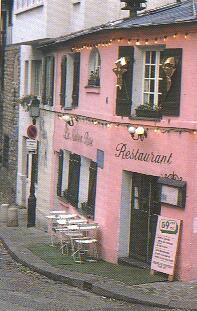 She
had numerous awards. She
had numerous awards.
Legendary during her life mythic after her death, her tomb is always flourished
at the cemetery Montmartre. Her fans still weep….
Take now the rue de l’Abreuvoir and admire at no. 6 the “Folie Neziere”,
another folly of the 18th century, at no. 4 a charming sun dial with
the inscription: “Quand tu sonneras, je chanterai…” Notice the reversed
letter ”N”. At no.2 rue de l’Abreuvoir is the famous “Maison Rose”,
immortalized by Maurice Utrillo. Reconverted today into a restaurant it became
one of the unavoidable tourist photo subjects of Montmartre. The menu is
multi-lingual, which gives you already the style of cuisine you can eat here.
Take now the rue Cortot where the MUSEE MONTMARTRE is located at no12 in an 17th
century country house and arranged by Rose de Rosimond, an actress of
Moliere’s company. She died exactly as Moliere, during a play on the stage in
the middle of a scene. Believe it or not but Renoir, Dufy, Poulbot, Suzanne
Valadon (mother of Utrillo) and Utrillo used to live in this house.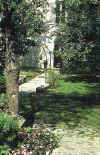 Especially Renoir who
set up an atelier to paint his young models. Renoir, being quite wealthy has
like that a sort of “groupies” following him everywhere to be painted and
paid for that of course. Even the mothers of these girls came to Renoir to
emphasize the beauty of their daughters and
Especially Renoir who
set up an atelier to paint his young models. Renoir, being quite wealthy has
like that a sort of “groupies” following him everywhere to be painted and
paid for that of course. Even the mothers of these girls came to Renoir to
emphasize the beauty of their daughters and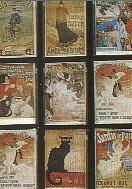 increase their monthly income ;-).
And what to say of the educational system of Suzanne Valadon? First of all she
never could tell who was the father of Utrillo (it might have been
Toulouse-Lautrec or Degas!). And what more…she added alcohol to the soup of
her son so he could fall asleep faster….so alcoholism marks the young Utrillo
already for life. The doctors, to turn his mind away from drinking advise him to
paint; and it’s the beginning of an exceptional vocation. The rooms are full
of memories of the “bohemian “ period of Montmartre. On the walls paintings
from Van Dongen, Dufy, Utrillo and a lot of less known artists. Also a lot of
old cabaret posters, drawings, caricatures and sculptures. There is even a copy
of an old bistro where Utrillo loved to come.
Bibliography
Vie
et histoire des arrondissements de Paris, ed.Hervas (1985-1988--Nouvelle
Histoire de Paris, ed.Hachette--Le Pieton de Paris, by L.P.Fargue, ed.Gallimard
--Dalida, la star mal dans sa peau", by J.Dufoix,(ed. Denoel) Paris 19eme
siecle, l'immeuble et la rue, by F.Loyer, ed.Hazan, 1994, --Montmartre, balades
et decouvertes, by Vincent de Langlade, (own folders 1998),--Montmartre dans
l'histoire de Paris, by E.Botteau ( Presse Cité, 1993)—Le
18th arrondissment, by Renaud Lefevre ed.Nelle’s)
|

