|
Louvre French painting Paris Site Home - What's New?-Feedback - About Jack-Travel/Art Links |
|
Louvre Introduction Greek, Etruscan, Roman antiques French painting section
More foreign paint section |
Paris-Louvre-French painting section-Greuze to Corot |
||||||||||||
| ...discover PARIS THROUGH THE AGES in the very best way possible :on foot with your own personal guide !!!!! |
Les
Hoteliers de Paris. A useful tool. Book now! |
||||||||||||
Let’s move on. The Louvre is huge!
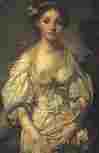
-Baptiste Greuze (1725-1805)
is to admire in gallery 51. He was surnamed the “Moralisator”, but is very
gracious when he paints “The Broken Jar”. In the face of "l'Oiseau
mort" you can already see how Renoir will paint 120 years later.
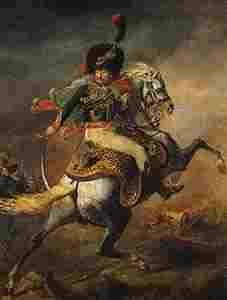
Gallery 61 (Salle Gericault): did you notice how many times Gericault uses horses in his paintings? Here on display the lyrical impetuosity, excitement and dramatic intensity in "Officier de chasse a cheval”, a masterpiece! From Horace Vernet (1758-1836] an academic, conservatist and outdated nationalism: " La Barriere de Clichy" Let’s move on, there is better and more innovating to come!
The major works of Delacroix
are on display in room 62: remember that the oversized, large paintings of Gericault) (Radeau de la Meduse) and Delacroix (“ Femmes d'Alger","
La Liberte “) are on the 1st floor, Denon wing in rooms 75 to 77.
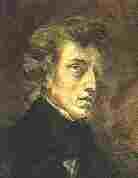
Here we see " l'Assassinat de l'Eveque de Liege", the famous
"Autoportrait and the universally known portrait of Frederic Chopin.
And to end, a series of
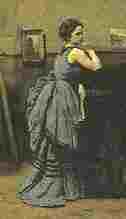
about 100 paintings by the sole Corot (1796-1875). Son of Parisian milliners,
Corot first worked as a cloth merchant before, at the age of twenty-six,
deciding to become a painter. Corot received official recognition in the 1840s
and soon had more landscape commissions than he could handle. But even at his
most realistic, Corot never entirely abandoned the lessons of his classical
training, and his landscapes are invariably pervaded by an atmosphere of idyllic
calm. Here we have "Zingara au tambour Basque", Jeune Fille Grecque a
la fontaine, Souvenir de Castelgandolfo "Femme a la Perle", several
paintings with a beautiful, slight touch, quivered, vaporous ambiance. A
consulted book-guide gave the idea that Corot was maybe influenced by the first
photographic clichés, who were mostly blurred? One thing is for sure. He
announces Impressionism. Bibliography The Louvre, Seven Faces of a Museum; The Louvre (Collection Guides Gallimard), Jean Francois Millet: His Life and Letters by Julia Mary Cartwright Ady (Published 1971), Drawn into the Light: Jean Francois Millet, by Alexandra R. Murphy (Published 1999), Ingres then and now (Visions: Critical Studies in the History and Theory of Art), by Adrian Rifkin, " Jean-Auguste-Dominique Ingres, by Robert Rosenblum (From Abrams' Masters of Art series), Eugene Delacroix 1798-1863, The Prince of Romanticism, by Gilles Neret, Delacroix, by Barthelmy Jobert.: the definitive Delacroix monograph, from the world's foremost expert on his art. |
|||||||||||||