|
From Nice to Menton
Nice
From Nice to
Menton-an itinerary
Villefranche-sur
mer
Saint-Jean-Cap
Ferrat
Beaulieu-Villa
Kerylos
Eze
perched village
Monaco
La
Turbie
Roquebrune-Cap Saint-Martin
Menton
From Nice to
Saint-Tropez
Cagnes-sur-Mer
Saint Paul de Vence
Vence-Matisse
chapel-City
Tourettes-Gorges
du
Loup-Gourdon
Grasse
Cabris and Valbonne
(anecdotes!)
Biot
Antibes
|
Long before Cannes and Nice
became so popular, the British stayed already over winter in HYERES, walked
during hot summers over the cool hilltops without even considering the sea, not
worth even a glance in their mind.
At the very beginning of the 18th century, when the train arrived in Hyeres, it started to become famous for its mild
winters, but also for its market-garden cultivations and its nurseries, where rare and exotic species of trees were growing.
In the 19th century, the city changed completely and assumed an aristocratic
appearance. Bright and welcoming, with its mild and salutary climate, Hyères attracted many famous winter
tourists, like Queen Victoria, Lamartine, Tolstoi, Michelet, Stevenson, Godillot.
They settled and built de luxe hotels and wondrous villas. Michelet, the queen of Spain, and before them
Mme. de Stael,
Talleyrand came to appreciate the city of palm trees.
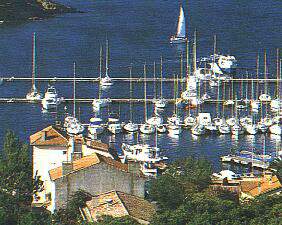 Does the Riviera start in
Hyères? Anyway it is the most southern of all Riviera
cities and the symbol of all Riviera beauty. Although it is often today viewed
as an unfashionable and slightly shabby cousin of the “real” Riviera towns,
this unfair reputation has its seeds in Queen Victoria’s flippant patronage of
Hyères in 1892, for no sooner had hotels and palm-lined avenues been built in
honour of her Majesty and her entourage than she decided to move on to Cimiez,
rendering the town “passé” almost overnight. Nevertheless it stayed in
fashion especially between the two world wars (in the money nobility circles and
the nobility with money). But the town visitors niveau degraded a lot when the
municipality decided to concentrate its energy on caravan owners and camping
visitors. Does the Riviera start in
Hyères? Anyway it is the most southern of all Riviera
cities and the symbol of all Riviera beauty. Although it is often today viewed
as an unfashionable and slightly shabby cousin of the “real” Riviera towns,
this unfair reputation has its seeds in Queen Victoria’s flippant patronage of
Hyères in 1892, for no sooner had hotels and palm-lined avenues been built in
honour of her Majesty and her entourage than she decided to move on to Cimiez,
rendering the town “passé” almost overnight. Nevertheless it stayed in
fashion especially between the two world wars (in the money nobility circles and
the nobility with money). But the town visitors niveau degraded a lot when the
municipality decided to concentrate its energy on caravan owners and camping
visitors.
But the French never ceased really visiting Hyères and it has long been a
centre for the seriously “sportif”, who take advantage for the subtropical
climate to sail, scuba-dive, windsurf and water-ski.
There are now three vast leisure ports and 35 km of beaches to be sampled.
The town is not totally dependant on tourism since it is surrounded by vast
greenhouses cultivating early fruits such as strawberries, peaches and kiwis as
well as ornamental plants, rare flowers (orchids) and potted palms. The busy
atmosphere of the modern town combines charmingly with its backdrop of faded
“belle- époque” grandeur.
The town continues to link itself to experimental cinema and has held an
International Festival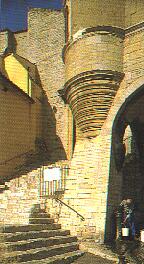 for young cinema for 25
years. for young cinema for 25
years.
 Hyères-Ville, located 5km from the sea is worth a small visit for its old
quarters. Have a coffee under the plane trees of the PLACE DE LA REPUBLIQUE
before starting the steep climb to its picturesque, twisting, medieval streets
up to the ruins of a 14th century chateau. You see now the CHURCH
SAINT LOUIS where he came to pray after his first crusade.
Entering old town find now the PLACE MASSILLON, where a food market is held each
morning, and Arab and Provencal delicacies can be bought. It is overlooked by
the “TOUR SAINTE BLAISE”, a massive abside of an ancient Knights Templar
command post. On the left is the COLLEGIATE CHURCH OF SAINT PAUL, open
9.30-12.00 and 15.00-19.00, closed on Tuesday. It has a monumental staircase
leading to a Renaissance portal. Gothic nave and Roman clock tower. The church
houses a stunning ex-voto collection (the oldest dates from 1613). Hyères-Ville, located 5km from the sea is worth a small visit for its old
quarters. Have a coffee under the plane trees of the PLACE DE LA REPUBLIQUE
before starting the steep climb to its picturesque, twisting, medieval streets
up to the ruins of a 14th century chateau. You see now the CHURCH
SAINT LOUIS where he came to pray after his first crusade.
Entering old town find now the PLACE MASSILLON, where a food market is held each
morning, and Arab and Provencal delicacies can be bought. It is overlooked by
the “TOUR SAINTE BLAISE”, a massive abside of an ancient Knights Templar
command post. On the left is the COLLEGIATE CHURCH OF SAINT PAUL, open
9.30-12.00 and 15.00-19.00, closed on Tuesday. It has a monumental staircase
leading to a Renaissance portal. Gothic nave and Roman clock tower. The church
houses a stunning ex-voto collection (the oldest dates from 1613).
Continue up the rue Barbacane and walk though an arch to rue du Paradis, where
an elegant Romanesque house looks inviting. A steep track snakes past the
PARC-ST.BERNARD, a garden of Mediterranean flowers and plants, to the castle. A
magnificent panorama will be your reward if you go through all of it.
The American novelist Edith Wharton (1862-1937) fell in love with the view when
she first visited 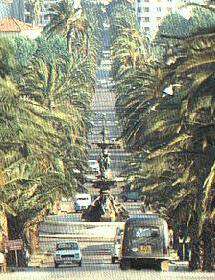 Hyères with André Gide in 1915.In 1927 she bought the
VILLA SINCLAIR, a country house in fake roman cloister style. It is said that
R.L. Stevenson wrote “Treasure Island” when he resided in the villa in 1883.
Edith Wharton had won the Pulitzer price in 1920 with her satiric novel
“The Age of Innocence” (1920) and received the same price again in 1924 for
“Old New York”. Unfortunately she stooped her autobiographic novels in 1934,
“A Backward Glance”. Hyères with André Gide in 1915.In 1927 she bought the
VILLA SINCLAIR, a country house in fake roman cloister style. It is said that
R.L. Stevenson wrote “Treasure Island” when he resided in the villa in 1883.
Edith Wharton had won the Pulitzer price in 1920 with her satiric novel
“The Age of Innocence” (1920) and received the same price again in 1924 for
“Old New York”. Unfortunately she stooped her autobiographic novels in 1934,
“A Backward Glance”.
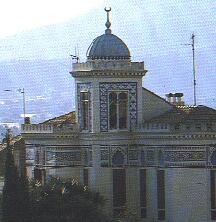
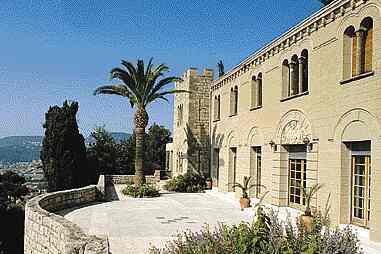
Another artistic-historical spot in Hyères is the villa NOAILLES, tel
0494651855 or 04385091. For those who love 1920 and Bauhaus architecture. The
villa was conceived by the Belgian architect Robert Mallet-Stevens for Charles and Marie
de Noailles .
|
|
|
Villa Noailles |
Works lasted 10 years and
will the an experimentation place for all new tendencies in decor and furnishing.
It will finally offer a house with about 40 rooms, a squash game room, a
gymnasium, and a pool. It’s in this immense volume of superposed cubes and terraces
receiving the light through vast glassed bays that they invited their friends
who belonged to the highest cultural circles: Luis Bunuel, Man Ray, sculptor
Giacommetti, Jean Cocteau and composers like Francis Poulenc and Georges Auric.
Certain of them realized works for the cadre of the villa which are famous today.
Marie-Laure de Noailles died in 1970 and in 1973 the city bought the villa.
Since 1975 it is classified as a "monument historique" and was
restored in 1988.
Bibliography:
John
Pemble, "the Mediterranean Passion, Victorians and Edwardians in the South",
(Oxford University Press 1988), Mary Blume, "Cote d'Azur. Inventing the
French Riviera" (Thames and Hudson, London 1982), The Twenties, From
Notebooks and Diaries of the Period, by Edmund Wilson (Cannes 1921),
“Tagebucher 1918-1937”, by Harry Graf Kessler (Presseschau, Munchen 1961).
|
From Nice to Saint-Tropez (suite)
Cap
d'Antibes
Juan les
Pins-Golfe-Juan-Vallauris
Cannes
Iles
de Lerins
La
Napoule and Henry Clews
Esterel
cornice to Frejus
Frejus
Sainte Maxime to Port Grimaud
Old Grimaud and Cogolin
Saint-Tropez
From Saint Tropez to Cassis
Ramatuelle-Gassin-Croix
Valmer-Cavalaire
sur mer
Le
Lavandou-Bormes les Mimosas
Hyères
Island of
Porquerolles
Island of Port Cros - Ile du
Levant
Toulon
From Toulon to
Sanary-sur-Mer
Bandol
and island of Bendor
La
Ciotat and route des Cretes
Cassis and the calanques
|