|
From Nice to Menton
Nice
From Nice to
Menton-an itinerary
Villefranche-sur
mer
Saint-Jean-Cap
Ferrat
Beaulieu-Villa
Kerylos
Eze
perched village
Monaco
La
Turbie
Roquebrune-Cap Saint-Martin
Menton
From Nice to
Saint-Tropez
Cagnes-sur-Mer
Saint Paul de Vence
Vence-Matisse
chapel-City
Tourettes-Gorges
du
Loup-Gourdon
Grasse
Cabris and Valbonne
(anecdotes!)
Biot
Antibes
|
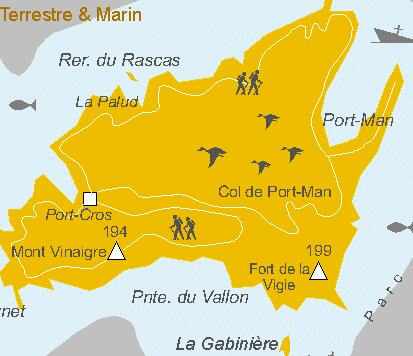
The island of PORT-CROS is
more rugged, quiet and is worth a whole day’s visit. Promoted national park
in 1963, it is the only one, which is together submarine and terrestrial. It’s
the most mountainous (highest point 196 m) of the Hyères islands, almost
circular and with a maximum length of 4.5 km.
It is an ecological paradise, over and over protected today, but it was nearly
destroyed by an unexpected enemy: its own success! The numerous leisure boats
saturated the capacity and were slowly eliminating all submarine life. Dramatic
consequences started to show: certain tree families were dying and rotten because of the used waters
thrown by the boat owners in the sea. And I will keep my mouth shut about the
amount of lead ejected by the diesel motors.
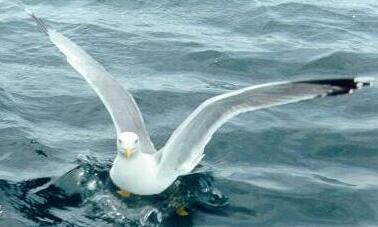 Explore
the island by walking through the valley of Solitude, the high-perched route des
Cretes and the vallon de la Fausse Monnaie to the only hotel in the island. This
Manoir d’Hélène is named after a female heroin of a novel. And it was here
that D.H.Lawrence is supposed to have met the Englishwoman whose confessional
post-coital
conversation inspired “Lady Chatterley’s Lover”. Explore
the island by walking through the valley of Solitude, the high-perched route des
Cretes and the vallon de la Fausse Monnaie to the only hotel in the island. This
Manoir d’Hélène is named after a female heroin of a novel. And it was here
that D.H.Lawrence is supposed to have met the Englishwoman whose confessional
post-coital
conversation inspired “Lady Chatterley’s Lover”.
Via the “Route des Forts” you can walk to the Col des Quatre Chemins from
where you can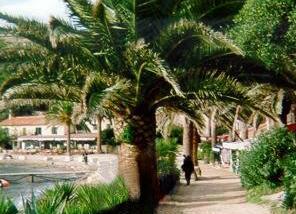 head any direction you want (35 km of walking trails). head any direction you want (35 km of walking trails).
Port-Cros proposes for diving amateurs a unique formula! An initiation trail for
exploration of the sub marine sub, the botanical path overgrown with wild
flowers whose scent accompanies you down to the sheltered beach and turquoise
waters of La Palud.
The last of the three islands is the ILE DU LEVANT, a strip of barren rock only
8 km long and 1.2 km wide. Bare al the nudist village and beach of Heliopolis
which used to be the Mecca of naturism. Since it has become acceptable to
take off your swimsuit on many beaches, the island has lost some of its “risqué”
reputation, but is still popular with dedicated nudists. The island proposes now
a total rest with its villas, small hotels drowned in mimosas and roses, its
path twisting in the garrigue. Not many promenades and you have to climb for 20
minutes before getting to the village. And what a strange sight of shopkeepers,
estate agents and waiters about their daily routine in G-string or less….
Bibliography:
John Pemble, "the
Mediterranean Passion, Victorians and Edwardians in the South", (Oxford
University Press 1988), Mary Blume, "Cote d'Azur. Inventing the French
Riviera" (Thames and Hudson, London 1982), The Twenties, From Notebooks and
Diaries of the Period, by Edmund Wilson (Cannes 1921), " Iles en Méditerranée",
by Fr.Leclere (JC.Lattes ed.-Paris 1998)
|
From Nice to Saint-Tropez (suite)
Cap
d'Antibes
Juan les
Pins-Golfe-Juan-Vallauris
Cannes
Iles
de Lerins
La
Napoule and Henry Clews
Esterel
cornice to Frejus
Frejus
Sainte Maxime to Port Grimaud
Old Grimaud and Cogolin
Saint-Tropez
From Saint Tropez to Cassis
Ramatuelle-Gassin-Croix
Valmer-Cavalaire
sur mer
Le
Lavandou-Bormes les Mimosas
Hyères
Island of
Porquerolles
Island of Port Cros - Ile du
Levant
Toulon
From Toulon to
Sanary-sur-Mer
Bandol
and island of Bendor
La
Ciotat and route des Cretes
Cassis and the calanques
|