Cap d'Antibes contents, history Site Home - What's New? -Feedback - About Jack- Travel/Art Links

Cote d'Azur
|
Cap d'Antibes contents, history Site Home - What's New? -Feedback - About Jack- Travel/Art Links |
|
|
|
Cote d'Azur |

|
COTE D'AZUR-Cap d'Antibes-History, anecdotes and Grand hotel du Cap |
|
|
From Nice to Menton From
Nice to From Nice to Saint-Tropez Tourettes-Gorges
du |
|
From Nice to Saint-Tropez (suite) Juan les From Saint Tropez to Cassis Ramatuelle-Gassin-Croix Valmer-Cavalaire sur mer Le Lavandou-Bormes les Mimosas Island of Port Cros - Ile du Levant |
||
|
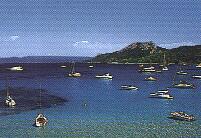
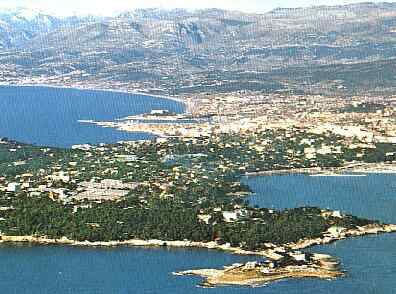
The magnificence
and isolated character attracted a lot of artists like Anatole France and Jules
Verne who wrote here “20.000 miles under the sea”. A magnificent
peninsula, refuge of multi-millionaires, with superb villas and luxurious
palaces of which the most famous « Hotel du Cap ». This edifice was
the propriety of an Italian, Antonio Stella, who bought it in 1889. A lot of
customers he didn’t have at that time but he was helped by the fact that the
American paper tycoon, owner of the New York Herald, Gordon Bennett, booked a
whole floor for his sister. When WWI broke out, Stella had
The same year
Murphy bought a villa in the Cap naming it “Villa America” and described in
an unforgettable way by Calvin Tomkins in “Living well is the best revenge”.
As unforgettable were the disastrous visits of Elda Fitzgerald in
1924 to the Murphy’s, an experience that resulted in Fitzgerald’s novel:
”Tender is the Night”, where the location was the villa America and
Stella’s hotel. It’s in tender is the night” that has the famous dialog
where Rosemary asks the couple, that is inspired by the Murphy’s, “Do you
like it here?” and a friend of the couple answers: ”they have to, they
invented it”.
Bibliography Mary Blume, "Cote d'Azur. Inventing the French Riviera" (Thames and Hudson, London 1982) Stephen Liegeard, "La Cote d'Azur (Ed.Serre, Nice 1988), Guide du Routard 1998-99, Patrick Howarth, “When the Riviera was ours” (Century, London 1977), Tender is the night, by Sott Fitzgerald, Living well is the best revenge”, by Calvin Tomkins-“Grandeur et déacadence du Cap d’Antibes”, by J.Dallonoé (ed.Adennes, Nice 1997) |
 built a pool next to his hotel where wounded American soldiers could kick out
their terror with their nurses. In the roaring twenties it even became better
and the base of what is now being called “The Eden Roc”, the most beautiful
swimming pool in the world, was created. But: in the 35 first years of his
ownership, Stella closed the hotel every year in the summer, by lack of guests.
But in the summer of 1923 a certain Murphy, friend of Cole Porter, convinced the
careful owner to keep the hotel open for him and his family. At least that what
history tells us. It wasn't a tremendous success. One and only cook, one ober,
one room cleaning girl cared that season for a Chinese and the Murphy family who
had convinced Picasso to join them. Picasso took his son Paolo and his wife Olga
with him.
built a pool next to his hotel where wounded American soldiers could kick out
their terror with their nurses. In the roaring twenties it even became better
and the base of what is now being called “The Eden Roc”, the most beautiful
swimming pool in the world, was created. But: in the 35 first years of his
ownership, Stella closed the hotel every year in the summer, by lack of guests.
But in the summer of 1923 a certain Murphy, friend of Cole Porter, convinced the
careful owner to keep the hotel open for him and his family. At least that what
history tells us. It wasn't a tremendous success. One and only cook, one ober,
one room cleaning girl cared that season for a Chinese and the Murphy family who
had convinced Picasso to join them. Picasso took his son Paolo and his wife Olga
with him. 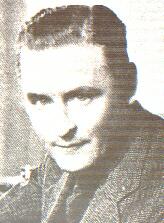
 period, like the one where Zelda Fitzgerald juts throw herself from the stairs
when Isadora Duncan flirts with Scott, or the storey where Scott, completely
drunk, throws irreplaceable Venetian glass over the garden fence and is ousted
from the villa for three weeks. In 1933 the Murphy’s returned to America. The
Villa America stayed a precious memory. Like Tomkins remarked in his book:
“The Riviera had lost its innocence. “The vanilla-cream coloured hotel of
Stella, called now Grand Hotel du Cap Ferrat like the restaurant on the Eden Roc
was much too expensive for the normal tourist. Only stars like Marlene Dietrich
and the Aga Khan moved around the swimming pool.
period, like the one where Zelda Fitzgerald juts throw herself from the stairs
when Isadora Duncan flirts with Scott, or the storey where Scott, completely
drunk, throws irreplaceable Venetian glass over the garden fence and is ousted
from the villa for three weeks. In 1933 the Murphy’s returned to America. The
Villa America stayed a precious memory. Like Tomkins remarked in his book:
“The Riviera had lost its innocence. “The vanilla-cream coloured hotel of
Stella, called now Grand Hotel du Cap Ferrat like the restaurant on the Eden Roc
was much too expensive for the normal tourist. Only stars like Marlene Dietrich
and the Aga Khan moved around the swimming pool.