|
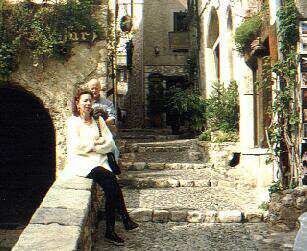 In the old city of SAINT
PAUL you can still see some lost painter working from a terrace,
picturing the
valleys full of orange In the old city of SAINT
PAUL you can still see some lost painter working from a terrace,
picturing the
valleys full of orange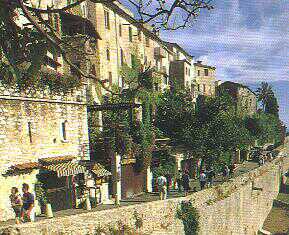 trees, pines, vineyards and flowerbeds. trees, pines, vineyards and flowerbeds.
But what a pity that the town was denatured by this intense commercialism. The
character of main street, rue Grande, a narrow crooked street which runs the
full length of the village and lined with 16th and 17th nice houses of
which a few still bear coats of arms, is completely destroyed and changed into too numerous craftsmanship
(?) boutiques, ateliers, souvenir shops, and other tourist traps of a doubtful
nature. Pass the place de la Grande-Fontaine with its pretty urn shaped
fountain. The small city has a 13th century
church and a “Musee municipal d’Histoire” on the place du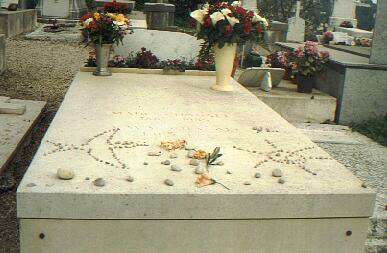 Castre.
Soon you will arrive at la
Porte du Sud or porte de Vence. Just next to the porte is the cemetery
where Chagall is buried. Try to find his grave, it's not easy. When I found it I
noticed no cross on the grave (he was Jewish) but
somebody had put little white
cobblestones on the tomb like it is done in the Castre.
Soon you will arrive at la
Porte du Sud or porte de Vence. Just next to the porte is the cemetery
where Chagall is buried. Try to find his grave, it's not easy. When I found it I
noticed no cross on the grave (he was Jewish) but
somebody had put little white
cobblestones on the tomb like it is done in the 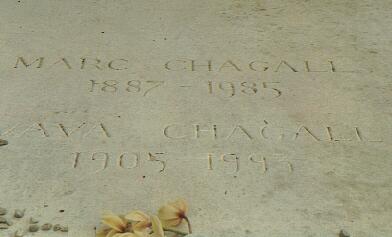 Jewish
tradition. The
cobblestones were artistically laid out in the form of one of Chagall's famous
doves. It was quite moving. Jewish
tradition. The
cobblestones were artistically laid out in the form of one of Chagall's famous
doves. It was quite moving.
A tour around the ramparts gives a good view of the surrounding countryside
studded with dark cypresses and azure swimming-pools , as well as a better sense
of life in St. Paul as a walk down the Grand Rue provides. You could catch some
glimpse of bougainvillaea -filled gardens and treasured terraces.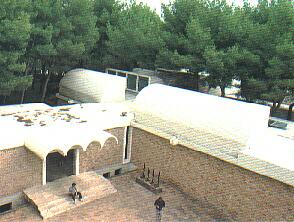
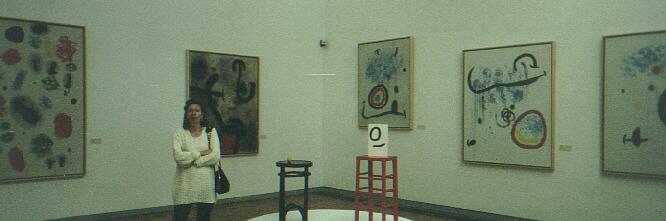
The second unavoidable site in Saint Paul is the FONDATION MAEGHT, a world class
museum of modern art, in fact my favourite on the Cote. More than 225,000
visitors enter every year. The foundation is the
story of Aimé Maeght and his friendship with Pierre Bonnard. The miracle of
Maeght’s encounter with Bonnard, living in Le Cannet and passed away in 1947
was that it revealed Maeght’s hidden talents for discovering new artists. 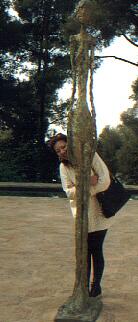 Maeght
opened a gallery in 1945 in the rue de Teheran in Paris and became one of
the most important places for modern and contemporary art in those days. Maeght
organized exhibitions of Maeght
opened a gallery in 1945 in the rue de Teheran in Paris and became one of
the most important places for modern and contemporary art in those days. Maeght
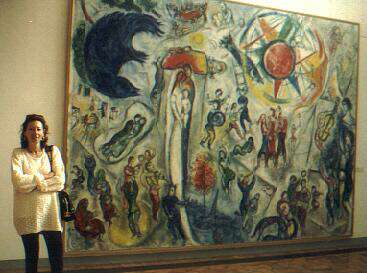
organized exhibitions of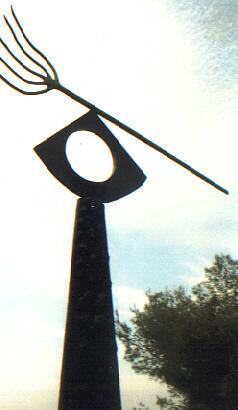 Bram van Velde, Miro, Chagall, Calder, Giacometti and a
lot of others. Thanks to their immense success they made a fortune and financed
with his wife Marguerite their and their own money the proud foundation Maeght
in Saint-Paul. The inauguration took place in 1964. Until today the Fondation Maeght needs no regional or national body to
tell him what to do. They tried and succeeded to respect the surrounding
landscape and luckily, they didn't have in mind to do some " fake-provencal"
cheap imitation. On the Bram van Velde, Miro, Chagall, Calder, Giacometti and a
lot of others. Thanks to their immense success they made a fortune and financed
with his wife Marguerite their and their own money the proud foundation Maeght
in Saint-Paul. The inauguration took place in 1964. Until today the Fondation Maeght needs no regional or national body to
tell him what to do. They tried and succeeded to respect the surrounding
landscape and luckily, they didn't have in mind to do some " fake-provencal"
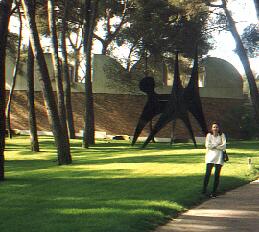
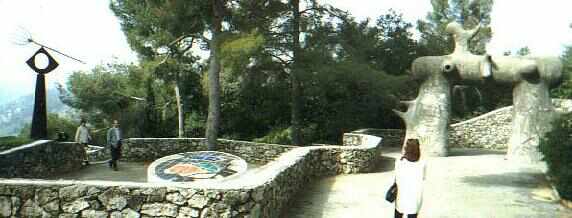
cheap imitation. On the 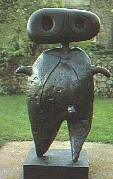 contrary, Miro is omnipresent in a stunning labyrinth of
statues, Pol Bury with his fountains, sculptures in strange shapes, scattered
all over the garden. They also restored an abandoned chapel in memory of their
deceased son. The contrary, Miro is omnipresent in a stunning labyrinth of
statues, Pol Bury with his fountains, sculptures in strange shapes, scattered
all over the garden. They also restored an abandoned chapel in memory of their
deceased son. The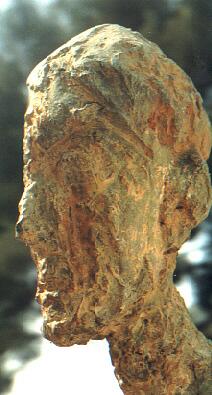 Foundation realized a perfect osmosis between the sculptures,
the architecture and the environment. The used materials are very simple:
brute concrete and rose roman bricks. Foundation realized a perfect osmosis between the sculptures,
the architecture and the environment. The used materials are very simple:
brute concrete and rose roman bricks.
Today there are regularly retrospectives held at the foundation: Kandinsky, De Stael, Van Velde, Miro and Klee. During the construction
they had active help from Chagall, Braque, Miro and Giacometti making mosaics,
glass stained windows in the chapel from Braque, sculptures and ceramics. In the
building and outside on the lawns we can see numerous works of all the artists I
named already plus Bonnard, Matisse, Fernand Leger and Zadkine.
When we enter the garden, we have right away the surprise of Giacometti’s
“Cat” and Miro’s “Egg”. Try to locate the Calder “mobile” and a
joyful ceramic of Leger.
The collection of paintings and sculptures is a very important one, the greatest
names of the 20th century: going from Tapies, Leger, Riopelle, Bonnard, Matisse,
etc. A MUST
Bibliography:
John
Pemble, "the Mediterranean Passion, Victorians and Edwardians in the
South", (Oxford University Press 1988), Mary Blume, "Cote d'Azur.
Inventing the French Riviera" (Thames and Hudson, London 1982) Stephen Liegeard,
"La Cote d'Azur (Ed.Serre, Nice 1988), Patrick
Howarth, “When the Riviera was ours” (Century, London 1977, “De Grote
Verzamelaars” by Ger.van het Groenewoud(ed. Alkmaar
1995), “La Fondation en fete” (Office du Tourisme, Nice 1995)
|