Brittany and its inhabitants the Bretons Site Home - What's New? -Feedback - About Jack- Travel/Art Links

Brittany
|
Brittany and its inhabitants the Bretons Site Home - What's New? -Feedback - About Jack- Travel/Art Links |
|
|
|
Brittany |
|
Bretons |
Brittany-The Bretons |
Treguier, lawyers pilgrimage and Lannion Auray, St.Goustan and the Quiberon peninsula. Gulf of Morbihan, its fisher ports and more Guerande and salt, and La Baule, beautiful beach resort Nantes, visit of this elegant city, shopping,churches, museums(2) Brest - Douarnenez - Pointe du Raz
|
|
Brittany
has always played an apart role in the history of France. Both Basse-Bretagne as
Haute –Bretagne might as well have been on another continent for centuries.
Armorica, or “land by the sea” as the early Celts called it in the 6th
century, had always been a world apart, an isolate granite peninsula whose
fishermen fought hostile seas and whose farmers struggles to coax crops from the
thin soil. Don’t forget that Breton culture was formed by centuries of all
sorts of
A
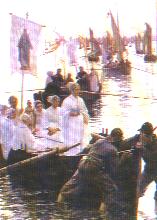
religious holiday only existing in Bretagne is the “pardon”, a yearly
procession when the inhabitants of the city mix with pilgrims. Despite it became
quite touristy, it remains a sincere expression of Breton piety. Between May and
September you can bet that there is a “pardon “ somewhere in Bretagne, every
day. That’s the occasion to put on the famous “coiffe” (with an e), long
and high lace headdresses, reminding me the form of menhirs! All villagers
parade with banners, candles and statues to ask forgiveness of their local
saint. After the procession there is Breton music on the village’s main
square.
Bibliography The horse of Pride, by Per-Jakez Hélias (Yale University Press), The letters of Abelard and Heloise, by Pierre Abelard (Penguin classics), Mémoires d’Outre Tombe, by René Chateaubriand (in French), The Chouans, by Honoré de Balzac (Penguin classics) |
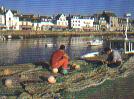 hardships, and hard, though life circumstances, as well on sea as on land. And
what a bad and unfriendly neighbour to the kingdom of France! It’s only in
1532 that Brittany came under French rule, the chief enemy lay to the north:
England. Until then and since then, we can say that the only visitors (except
today of course) were invaders and confidence was far to seek. And it is a fact
that the Bretons were often used by French authorities, royal or Republican, as
“chair à canon” (cannon-fodder). Mostly young Breton boys were sent on the
hardships, and hard, though life circumstances, as well on sea as on land. And
what a bad and unfriendly neighbour to the kingdom of France! It’s only in
1532 that Brittany came under French rule, the chief enemy lay to the north:
England. Until then and since then, we can say that the only visitors (except
today of course) were invaders and confidence was far to seek. And it is a fact
that the Bretons were often used by French authorities, royal or Republican, as
“chair à canon” (cannon-fodder). Mostly young Breton boys were sent on the 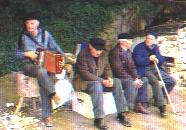 first
and most advanced front lines, towards death, in bloody battles of WWI.
first
and most advanced front lines, towards death, in bloody battles of WWI. reserved, even distrustful at first acquaintance. Bretons are hard working
people, who you can trust and keep their parole.
reserved, even distrustful at first acquaintance. Bretons are hard working
people, who you can trust and keep their parole.