|
With
the Atlantic seaboard to the south, west and north, Brittany draws the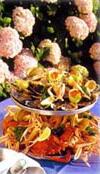 diversity of its cuisine from the sea, which provides its wealth of fish and
shell
diversity of its cuisine from the sea, which provides its wealth of fish and
shell
 fish: coquilles Saint-Jacques (sea scallops), lobster, spiny lobster,
oysters and mussels, shrimps, mackerel, and many tasty varieties of fish like
sardines, coalfish, monkfish, tuna... But the high rank in refinement and haute
cuisine it gained is the result of hard labour and quite recent. Yes indeed, for
a long time the Breton cuisine was heavy and uninteresting, at least for the
refined palates (like you all J). That changed! And for the best.
fish: coquilles Saint-Jacques (sea scallops), lobster, spiny lobster,
oysters and mussels, shrimps, mackerel, and many tasty varieties of fish like
sardines, coalfish, monkfish, tuna... But the high rank in refinement and haute
cuisine it gained is the result of hard labour and quite recent. Yes indeed, for
a long time the Breton cuisine was heavy and uninteresting, at least for the
refined palates (like you all J). That changed! And for the best.
Famous for the produce of its soil, especially the quality of its charcuterie
(andouilles de Guémené, tripes, pâtés rennais, etc.): it is, after all,
Brittany is Europe's leading producer of pork. It is also renowned for its dairy
produce such as its famous salted butter, the taste of its poultry and its lamb,
deliciously complemented by such vegetables as cauliflower and artichoke. Other
specialties of the region are wafer biscuits and butter cookies.
 Today,
the Breton products are a discovery for the non-initiated, which will find also
farm products such as salt meadow lamb, poultry and pork meat products. And the
new cooks know damn well how to prepare them in an original, typical haute but
Breton way. Today,
the Breton products are a discovery for the non-initiated, which will find also
farm products such as salt meadow lamb, poultry and pork meat products. And the
new cooks know damn well how to prepare them in an original, typical haute but
Breton way.
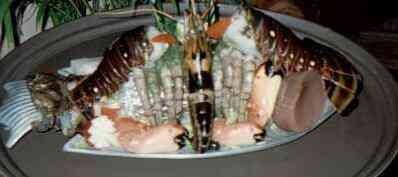
Take now the seafood platter! Some people would make a side trip of 150 km for a
good Breton seafood platter. Shrimps, oysters, scallops, mussels but also crab
and langoustines (mmm…!). Typical are the “praires “ Breton oysters.
And even homard (lobster), king of the shellfish will make us obey its will :-).
Fish comes in all sorts and varieties. From sardine to tuna, red gurnard to
sole, eel to John Dory.
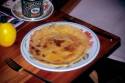 Delicious
crêpes in one of the typical Breton "crêperies” welcome visitors with a
traditional cup of cider. Crèpes or pancakes can be eaten either savoury (with
eggs, ham, crême fraîche, cheese) or sweet (with apples, nuts, chocolate,
jam). Consider them as lacy galettes and a delicacy. These pancakes originally
weren't the fine and delicate ones we know today. The buckwheat that they grew
well in the granite soil in Brittany was simply kneaded with salt and water to
form a dough and baked on stones, these were the original galettes, which were
part of the staple diet of the Bretons. Breton savoury pancakes today are
prepared from buckwheat flour, eggs and milk or water (dependent on the area). Delicious
crêpes in one of the typical Breton "crêperies” welcome visitors with a
traditional cup of cider. Crèpes or pancakes can be eaten either savoury (with
eggs, ham, crême fraîche, cheese) or sweet (with apples, nuts, chocolate,
jam). Consider them as lacy galettes and a delicacy. These pancakes originally
weren't the fine and delicate ones we know today. The buckwheat that they grew
well in the granite soil in Brittany was simply kneaded with salt and water to
form a dough and baked on stones, these were the original galettes, which were
part of the staple diet of the Bretons. Breton savoury pancakes today are
prepared from buckwheat flour, eggs and milk or water (dependent on the area).
 The most
popular filling for savoury crepes is egg and ham. The eggs are either prepared
'brouille” scrambled on the crepe or “miroir” cooked untouched on the
crepe. The pancake is ready when the egg is just cooked, simply fold in the
sides to envelope it and the egg yolk should just show out. These pancakes are
very difficult to recreate home, as you need to spread them out to a wafer thin
layer on a hot girdle. Many chefs try to recreate them in their kitchens with
little success. The most
popular filling for savoury crepes is egg and ham. The eggs are either prepared
'brouille” scrambled on the crepe or “miroir” cooked untouched on the
crepe. The pancake is ready when the egg is just cooked, simply fold in the
sides to envelope it and the egg yolk should just show out. These pancakes are
very difficult to recreate home, as you need to spread them out to a wafer thin
layer on a hot girdle. Many chefs try to recreate them in their kitchens with
little success.
Sweet crepes are lighter and prepared form wheat flour and are often served with
a little sugar sprinkled over or a little honey or jam.
Bon appetit!
Bibliography
Cuisine de Bretagne, by Florence Arzel-La cuisine bretonne d'aujourd'hui , by
Louis Le Roy-Cuisine et gastronomie de Bretagne , by Louis Le Cunff
|