Brittany-Morbihan gulf -Site Home - What's New? -Feedback - About Jack- Travel/Art Links

Brittany
|
Brittany-Morbihan gulf -Site Home - What's New? -Feedback - About Jack- Travel/Art Links |
|
|
|
Brittany |
|
Treguier, lawyers pilgrimage and Lannion Auray, StGoustan and the Quiberon peninsula Gulf of Morbihan, fisher ports Guerande and salt, and La Baule, beautiful beach resort Nantes, visit of this elegant city, shopping,churches, museums(2). Brest - Douarnenez - Pointe du Raz
|
Brittany-Gulf of Morbihan, fisher villages and more |
|
|||||||
|
|
|||||||||
|
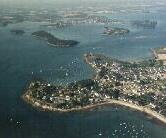
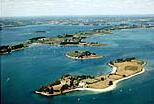
From Vannes take any of the minor roads, like the D 101, west and it will undoubtedly lead you to a tiny harbor. You can make a day or two excursions to the golfe de Morbihan. It's in itself almost too pretty. On a sunny day the vast expanse of water is dotted with little boats negotiating between the green and intriguing islands. If ever you ask how many islands there are in the gulf, you will always receive a different answer.
According to a legend there are 365-one for each day of the year--- but grumps say that there are less since the islets whocome dry at low tide, don't count! The two biggest islands are l'ILE AUX MOINES and l'ILE D'ARZ, where you can find a lot of megaliths. They are connected to the mainland by ferries, a very cheap and versatile way of viewing the panorama. You can also make round trips, which take several hours and are quite expensive. A recommended routine is to drive to Port Blanc to catch the ferry across to the Ile aux Moines, picnic under pine trees, make a swim on a sandy beach and catch the boat back (Vedette Verte).
The Ile d'Arz is only well known because it has a good restaurant: "L'Escale", open from April to October. Excellent food and not so expensive as you would expect, though tourist-oriented. A few rooms are for rent.
On the southern shore of the peninsula is the monastery of St.GILDAS DE RHUYS, founded by St.Gildas in the 6th century. Surrounded by big and mysterious menhirs, the remarkable 11th century abbey church was run by the famous Abelard. |
|||||||||
 And you have several planes like that. Whatever pan is adopted, the gulf is an experience not to be missed.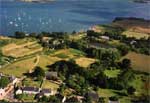
 boat or dog out for his daily exercise.